Quick answer: In the first hour of a roof leak, protect people first: turn off power to any wet light fixtures or outlets, and stay out from under a sagging ceiling. Then contain the water with buckets and towels, move valuables away, and photograph everything with timestamps. Call a roofer to tarp the roof and a water damage restoration company to dry the inside. The roof and the interior are two separate jobs, and the interior is usually the bigger one.
San Diego goes months without meaningful rain, so the first real storm of the season finds every weak spot a roof has. According to the National Weather Service, about 85% of San Diego’s rainfall arrives between November and March. After a long dry summer, gutters are packed with leaves, sealant around vents and skylights has dried and cracked in the sun, and nobody has looked at the roof since last winter. The first heavy rain is the test.
If you’re reading this with water dripping from your ceiling, the steps below are in the order that matters. If you’re reading it before the storm, keep it handy.
The First Hour: What to Do, in Order
1. Make It Safe (First 5 Minutes)
Water and electricity are the real danger in a roof leak. If water is coming through a light fixture, a ceiling fan, or near outlets, switch off that circuit at the breaker panel. If you can’t tell which circuit it is, or the panel area itself is wet, don’t touch it. Keep kids and pets out of the room.
Look up before you stand under the leak. A ceiling that is bulging, sagging, or bowing downward is holding water, and drywall can let go without warning.
2. Relieve a Bulging Ceiling, Carefully (If You’re Comfortable Doing It)
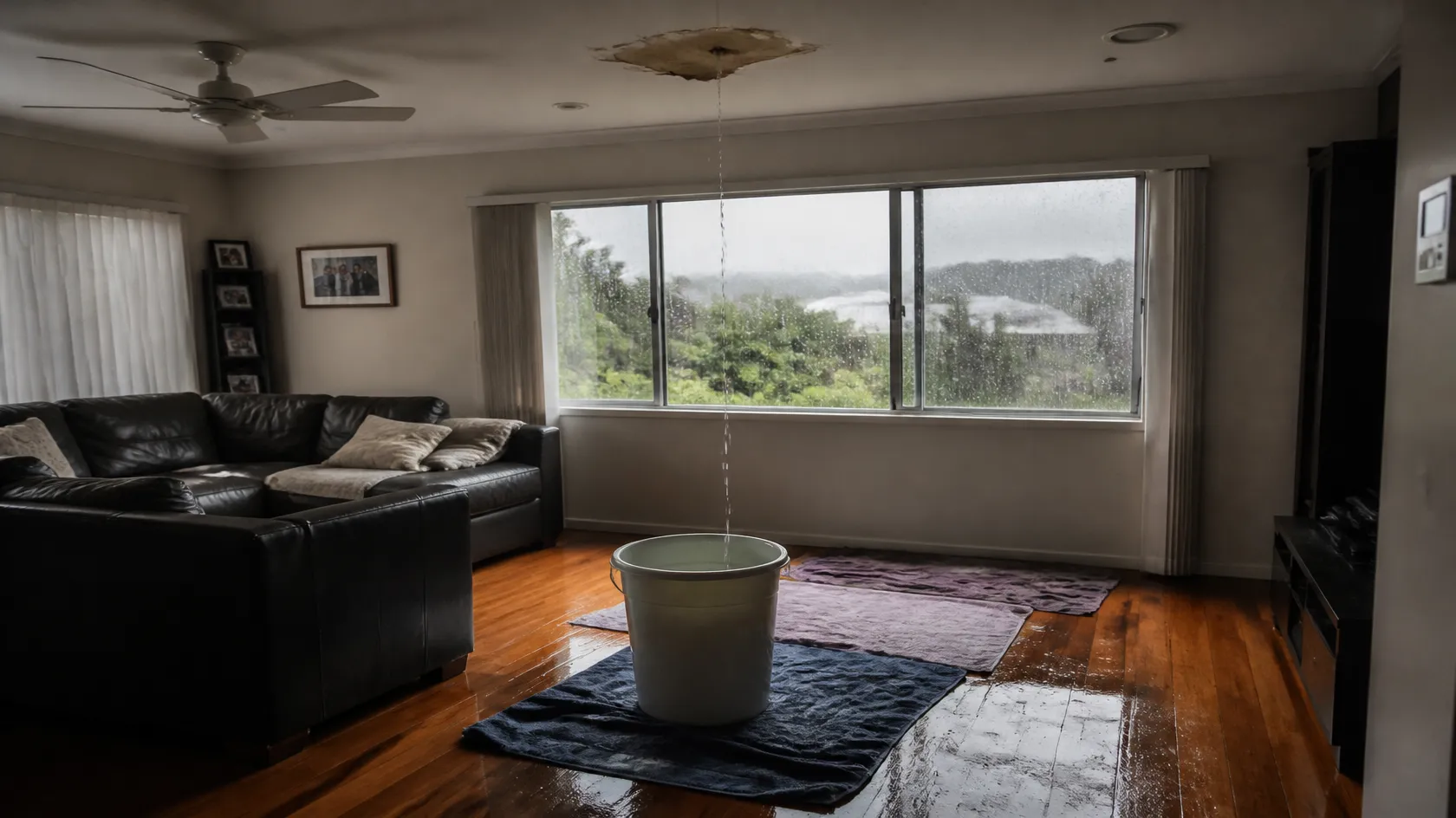
A ceiling bulge is a pocket of water sitting on the back of the drywall. Left alone, it spreads sideways into more ceiling and more insulation before it finally drops. Put a bucket directly beneath the lowest point. Standing to the side, not underneath, poke a small hole at the center of the bulge with a screwdriver. That lets the water drain into the bucket in a controlled way. If the bulge is large or the ceiling is already cracking, skip this step, leave the room, and call for help.
One caution for older homes: if your house was built before the 1980s and the ceiling has a textured “popcorn” finish, that material may contain asbestos. Avoid scraping or breaking more of it than necessary. A professional should test it before any ceiling removal.
3. Contain the Water
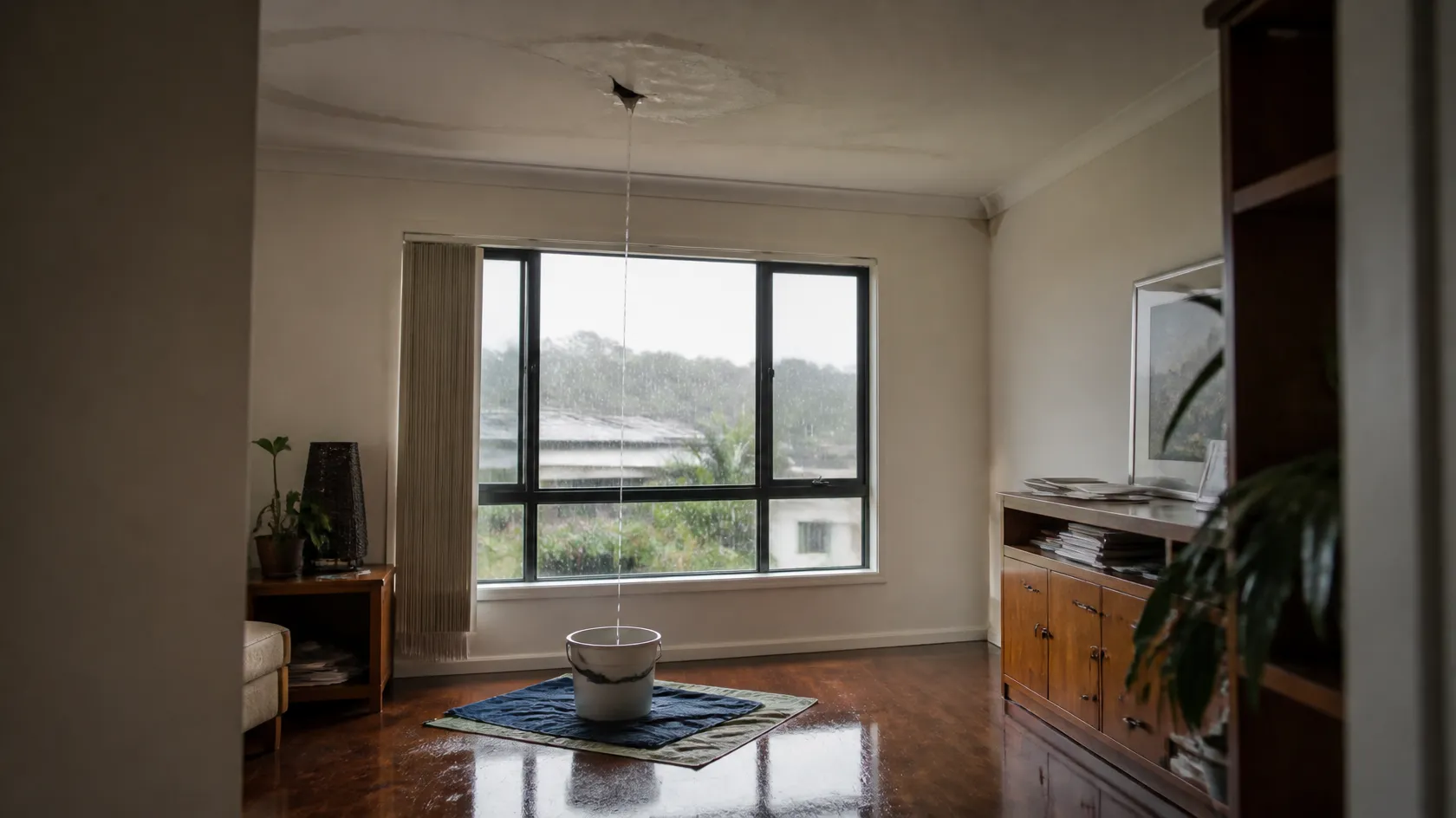
Put buckets, pots, or storage bins under every drip. Lay towels around them to catch splash. A towel or rag set in the bucket stops the “plink” splash from soaking the floor around it. Roll up area rugs if water is reaching them, and pull up anything lying on carpet.
4. Move What Matters
Get electronics, documents, photos, and furniture out of the drip zone. Furniture you can’t move can sit on aluminum foil or plastic wrap under each leg. This keeps wood stain and rust from transferring into wet carpet.
5. Document Everything Before You Clean Up
Take photos and video of the ceiling, the drips, the wet floor, and anything damaged. Your phone timestamps them automatically. Note the time the leak started. If your home has an attic you can safely reach, photograph the underside of the roof deck too. Insurers decide coverage largely on cause and timing, and the first pictures are the ones that answer those questions.
6. Make Two Calls: The Roof and the Inside
Call a roofing contractor for an emergency tarp or temporary repair. The roof is its own trade, and it should be fixed by someone who does roofs every day. Call a water damage restoration company for everything from the roof deck down: soaked insulation, wet drywall, framing, flooring, and the mold risk that follows. Gold Coast handles roof leak water damage repair on the interior and coordinates the tarping and repair sequence with roofers, so the two jobs happen in the right order.
7. Don’t Climb on the Roof
Wet tile and shingle roofs are slick, and a storm adds wind and poor visibility. No interior damage is worth a fall. Tarping is a job for a roofer with the right equipment, after the worst of the weather passes.
What You’re Seeing, and What It Likely Means
| What You See | What It Likely Means | What to Do Now |
|---|---|---|
| Brown ring or stain on the ceiling, no drip yet | Water is wetting the back of the drywall and the insulation above it | Bucket underneath, photos, call for moisture mapping; the wet area is usually larger than the stain |
| Bulging or sagging ceiling | Water is pooled on the back of the drywall | Stay out from under it; drain carefully or leave the room and call |
| Water dripping from a light fixture or fan | Water is following the electrical box | Shut off that breaker immediately; don’t use the fixture |
| Drip near a skylight, chimney, or vent pipe | Flashing or sealant has failed at a roof penetration | Contain, photograph, tell the roofer exactly where it is |
| Water running down an exterior wall inside | Water may be entering at the roof-to-wall joint or through the wall itself | Pull furniture away, check the floor along that wall for wet carpet pad |
| Musty smell after the rain stops | Insulation or materials are still wet and starting to grow mold | Call for an inspection with moisture meters and thermal imaging |
Why San Diego Roofs Leak in the First Storm
Most first-storm leaks don’t come from a dramatic hole. They come from small failures that built up quietly during the dry months.
- Tile roofs with worn underlayment. Concrete and clay tile is everywhere in San Diego County, from Rancho Bernardo to Santee. The tile itself is durable, but it isn’t the waterproof layer. The underlayment beneath it is, and it wears out long before the tile does. A tile roof can look perfect from the street and still leak.
- Clogged gutters and roof drains. Leaves and debris collect all summer. When the first heavy rain hits, water backs up under the roof edge or pools on flat sections.
- Flat and low-slope roofs. Many older ranch homes, condos, and additions have flat sections. A blocked scupper or drain turns these into shallow ponds that find any seam.
- Penetrations and flashing. Skylights, chimneys, vent pipes, and roof-mounted equipment all depend on flashing and sealant. Months of UV exposure dry and crack that sealant.
- Wind-driven rain. Storms that come in sideways push water under tiles and shingles at angles the roof wasn’t designed to shed.
If the storm caused damage beyond the roof, see our storm damage cleanup service.
Why the Drip Is the Smallest Part of the Problem
The water you see is only the water that found its way down to you. Above the ceiling, insulation acts like a sponge. Water spreads along ceiling joists and runs down inside walls before it ever shows on the surface. That’s why a restoration crew starts with moisture meters and thermal imaging, not just a look at the stain. The goal is to find the edges of the wet area, not just its center. Our ceiling water damage page explains what that process looks like.
Speed matters because mold can begin growing on wet building materials within 24 to 48 hours. Wet insulation usually has to come out, since it rarely dries back to its original performance. Drywall can sometimes be dried in place if the readings support it. When it can’t, it gets removed and replaced. At Gold Coast, structural drying ends when the readings say the materials are dry, not on a fixed calendar day. Every reading is logged for the insurance file.
Older Homes Need Extra Care
If your home was built before 1978, painted surfaces may contain lead. Popcorn ceilings from before the 1980s may contain asbestos. Neither is a reason to panic, but both are reasons not to start tearing out a wet ceiling yourself. Gold Coast is a U.S. EPA Lead-Safe Certified Firm and tests suspect ceiling materials before disturbing them.
What Not to Do
- Don’t run a shop vac on wet carpet near live outlets or use any electrical appliance while standing in water.
- Don’t paint over a ceiling stain once things dry out. A stain is evidence of where the water went, and paint can trap moisture behind it.
- Don’t wait for the rain to stop to call. Response times stretch during storms, and the first call gets the first slot.
- Don’t throw out damaged items before they’re photographed and, ideally, seen by your adjuster.
- Don’t assume it dried on its own. A ceiling that looks dry can still hold wet insulation above it.
Will Insurance Cover a Roof Leak?
It depends on the cause, and the wording of your own policy controls. As a general pattern, sudden damage caused by a storm, such as wind lifting tiles and letting rain in, commonly qualifies. A leak caused by long-term wear, an old roof, or deferred maintenance commonly doesn’t. Many policies also expect you to take reasonable steps to prevent further damage once you discover a leak. That’s one more reason to contain the water, call for a tarp, and start drying quickly.
What helps your claim: dated photos from the first hour, a record of the storm (local weather reports for that date), and professional documentation of the cause, category, moisture readings, and drying logs. No restoration company can promise a claim outcome. Clear documentation gives your adjuster what they need to make a decision. Learn more about how we help with water damage insurance claims.
What Affects the Cost of Interior Repairs
We can’t price a roof leak over the internet. Honest pricing requires seeing the wet area. These are the factors that move the number:
- How far the water spread across the ceiling and into walls
- Whether insulation and drywall can be dried in place or must be removed
- How long materials stayed wet, and whether mold is present
- Whether asbestos or lead testing and safe-handling practices are needed
- The rebuild: drywall, texture matching, paint, and any flooring below
Acting in the first hour is the single biggest thing a homeowner can do to keep that list short.
Before the Next Storm: A 10-Minute Checklist
- Clear gutters, downspouts, and flat-roof drains or scuppers.
- From the ground, look for slipped, cracked, or missing tiles and shingles.
- Check the ceiling around skylights and vent pipes for old stains.
- Know where your breaker panel is and label the circuits.
- Keep two buckets, a tarp, and old towels where you can find them.
- If your roof is older, or a tile roof has never had its underlayment checked, have a roofer inspect it now, not during the storm.
Frequently Asked Questions
Should I put a hole in my ceiling if it’s bulging with water?
If the bulge is small and the ceiling isn’t cracking, a small hole at the lowest point, made while standing to the side with a bucket beneath, lets the water drain in a controlled way. If the bulge is large or already cracking, leave the room and call a professional.
Who do I call first, a roofer or a water damage company?
Call both. The roofer stops new water from coming in, and the restoration company removes the water already inside and dries the structure. Gold Coast handles the interior and coordinates the sequence with roofers so the two jobs happen in the right order.
How fast can mold grow after a roof leak?
Mold can begin growing on wet building materials within 24 to 48 hours. Wet insulation and drywall above the ceiling are where it often starts, out of sight.
Can wet ceiling drywall be saved?
Sometimes. If moisture readings show the drywall can dry before it loses strength or grows mold, it can be dried in place. If it’s sagging, crumbling, or contaminated, it should be replaced.
Does homeowners insurance cover roof leak water damage?
Often, when the damage is sudden and storm-caused. Usually not when it results from wear, age, or lack of maintenance. Your policy wording controls, so report the loss promptly and document it well.
Is it safe to stay in my house with a roof leak?
Usually yes, as long as wet electrical fixtures are shut off and no ceilings are at risk of falling. If water is near your electrical panel or a large section of ceiling is sagging, stay out of those areas until a professional has checked them.
Why Gold Coast Flood Restorations
Gold Coast has handled water damage across San Diego County for more than 30 years. We’re IICRC certified, including Applied Structural Drying. We hold California General Contractor License #838802, so the same company that dries your home can rebuild the ceiling, match the texture, and repaint. We’re a U.S. EPA Lead-Safe Certified Firm, and when mold is involved, we use independent third-party testing to verify the result. If your ceiling only needs a fan and a few hours, we’ll tell you that. If you don’t have a problem, we won’t fabricate one.
Roof leaking right now? Call our 24/7 emergency line at (858) 495-9133, or reach the main office at (619) 449-9611.