A water loss hands every homeowner two jobs at once. The first — stopping the water, drying the house — at least has visible progress. The second is quieter and often more stressful: the claim. A policy written in language nobody reads recreationally, an adjuster you’ve never met, deadlines and duties you didn’t know you had, and a five-figure question underneath all of it. Gold Coast Flood Restorations has worked alongside San Diego homeowners’ insurance claims for more than 35 years — thousands of losses, every major carrier, every category of water event. This page explains how the process actually works, what a restoration company can honestly do to help (and what it can’t), and why documentation — not argument — is what moves claims.
First, the Honest Boundary
Worth stating before anything else, because companies that blur it serve themselves: Gold Coast is a restoration contractor, not a public adjuster, an attorney, or your insurance company. It cannot negotiate your settlement for you, promise what your policy will pay, or decide coverage — those roles belong to you, your carrier, and (should you ever hire them) licensed public adjusters or counsel.
What a restoration company can do is what actually determines most claims’ outcomes anyway: perform the prompt mitigation your policy requires, document the loss with professional rigor at every stage, communicate with your adjuster in the technical language claims run on, and hand you a file that makes your case for you. Thirty-five years of A+ BBB standing was built on doing exactly that — and on never pretending to be more than that.
The Right Nobody Tells You About: You Choose Your Contractor
Here is the fact that matters most in the first phone call with your carrier, delivered before the moment it’s needed: you are not required to use your insurance company’s “preferred vendor.” When the claims line says “we have a company we can send out,” that’s an offer, not an instruction — the choice of who mitigates and repairs your home belongs to you, the policyholder, and it always did.
The distinction is worth understanding plainly, because the two arrangements answer to different people. A preferred vendor’s business runs on claim volume from the carrier — the referrals are the revenue, and keeping them flowing means keeping the referrer happy. That’s not an accusation of bad work; it’s an incentive structure, and homeowners deserve to know whose interests sit where when scope questions get close: how much gets dried versus replaced, where the cut lines land, how hard anyone pushes on a supplement. A contractor you choose works for you — hired by you, accountable to you, documenting the loss in your interest, with the carrier as the party reviewing the evidence rather than the party signing next quarter’s referrals.
Many homeowners discover this right only after the preferred vendor is already in the house — which is why it leads this page instead of hiding in it. The moment to exercise the choice is the first call: report the loss, decline the dispatch politely, and name your own contractor. Gold Coast has worked as the homeowner’s chosen contractor alongside every major carrier for three decades — the arrangement works smoothly, it’s entirely routine, and the documentation this page describes is precisely what makes it work.
Your Policy’s One Big Demand: Mitigate Now
Here is the clause that surprises homeowners at the worst moment: virtually every policy requires the insured to take reasonable steps to prevent further damage after a loss. Waiting for the adjuster before starting the dry-out isn’t caution — it’s a coverage risk, because damage that accrues from delayed mitigation can be attributed to the delay rather than the loss.
The practical order of operations, then: stop the water, call the mitigation in immediately, and report the claim promptly — in parallel, not in sequence. Emergency mitigation doesn’t need the adjuster’s pre-approval; it needs to happen, and to be documented. Gold Coast’s 24/7 response exists partly for this exact reason: the mitigation clock and the coverage clock are the same clock.
How a Water Claim Actually Runs
The report. You notify your carrier — promptly, factually, and with the cause described accurately, because the source of the water is the single fact that most determines coverage. A claim number and an adjuster assignment follow.
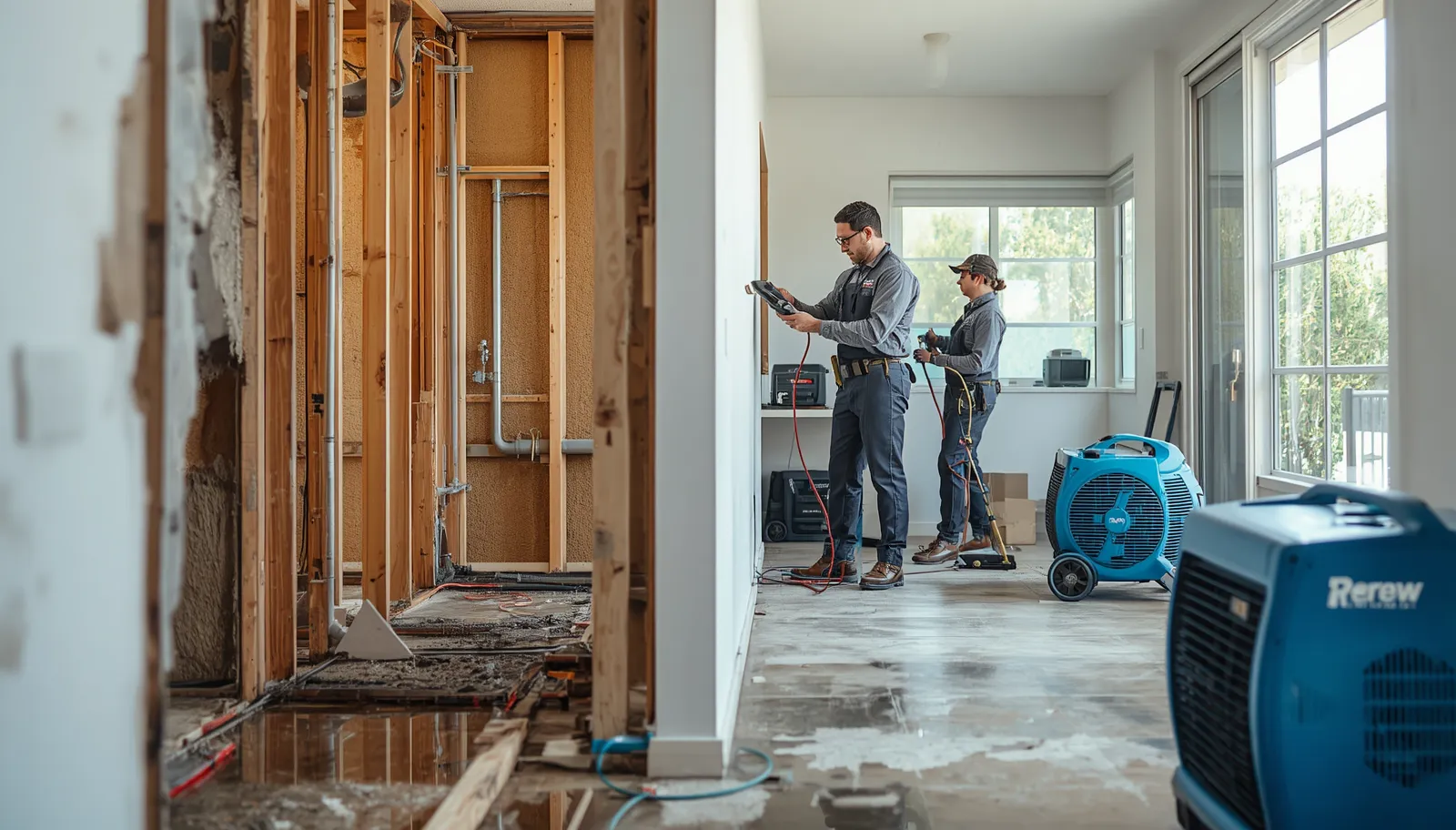
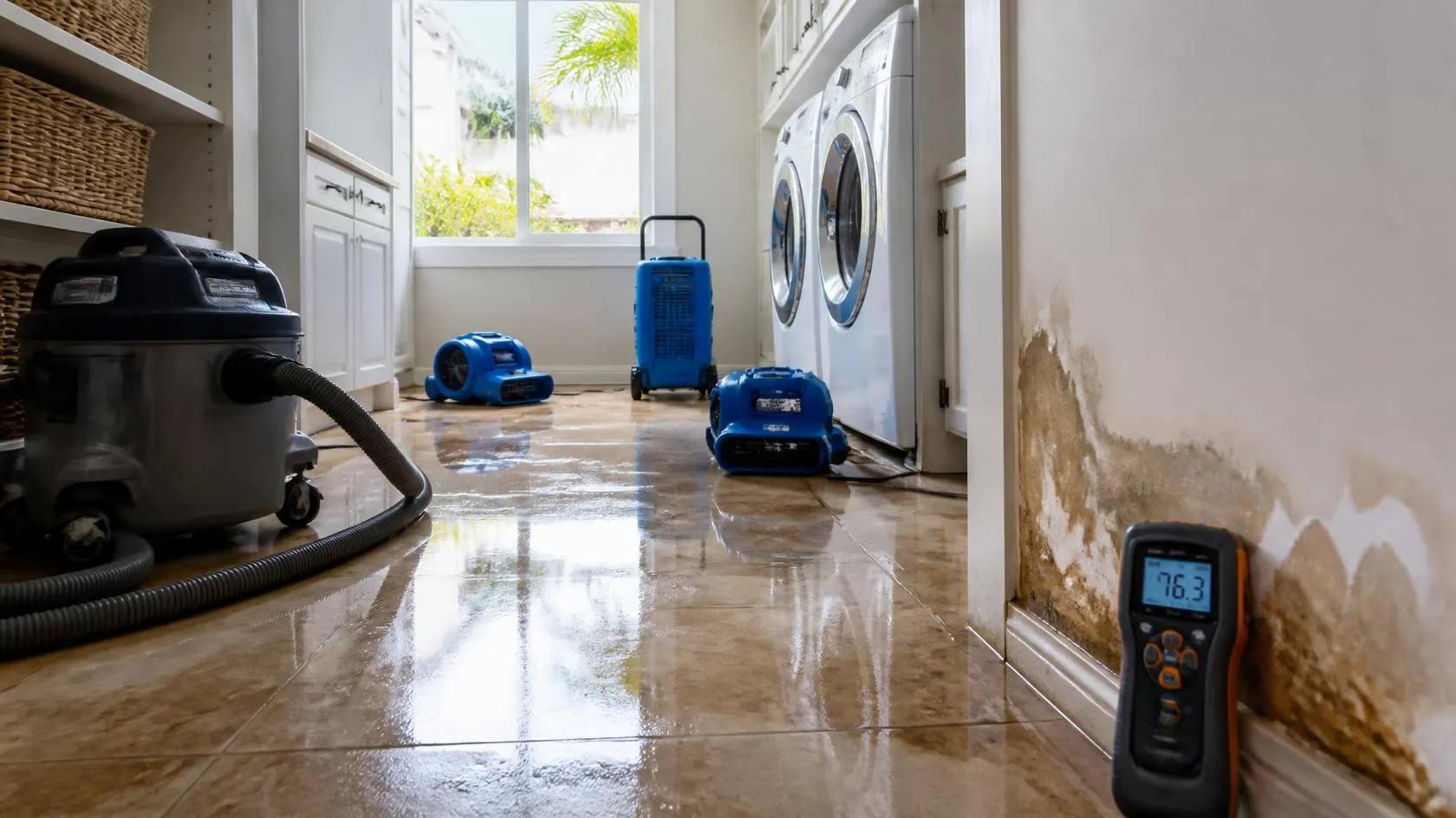
The mitigation, documented from hour one. While the claim spins up, the loss gets stabilized and dried — and everything gets recorded: cause and category determination, photos before anything moves, moisture maps showing the true extent, daily drying logs, inventories of what the category condemned, disposal records under permit. This file is the claim’s spine, and it’s built as standard practice on every Gold Coast loss.
The adjuster’s inspection. The carrier’s adjuster evaluates the loss — sometimes in person, sometimes from the documentation. This is where professional records earn their keep: an adjuster reviewing instrument readings, mapped scope, and a clear cause determination approves faster and questions less than one squinting at a homeowner’s phone photos. Gold Coast walks adjusters through its losses routinely and speaks the estimating language the industry uses.
The scope and the estimate. Coverage decisions and repair scope take shape, with the reconstruction estimate written against the same documentation the mitigation produced — cut lines traceable to moisture readings, removals traceable to category calls. Line items that trace to evidence get paid; line items that trace to nothing get argued.
Supplements, done properly. Rebuilds routinely uncover what mitigation couldn’t see — the rot behind the enclosure, the framing under the subfloor. The professional path is the documented supplement: photographed, explained, submitted through the carrier’s process. The amateur path is the surprise invoice, and it loses.
Settlement and the deductible. The claim resolves per your policy’s terms — coverage, limits, depreciation and recoverable depreciation where applicable, minus your deductible. How payments flow (to you, to contractors, through a mortgage company’s endorsement process) varies by carrier and loan; your adjuster and Gold Coast’s office both navigate the mechanics daily.
The Coverage Landscape, Consolidated
Every service page on this site carries its own insurance note; here is the map they all draw from — offered as the pattern carriers commonly follow, never as a promise about your policy:
Sudden and accidental discharge — the burst pipe, the failed supply line, the ruptured water heater — is the classic covered water loss: resulting damage commonly covered, the failed part itself commonly not.
Gradual damage — the slow drip, the long-running enclosure leak, the seepage nobody caught — meets the maintenance and long-term-leak exclusions that generate most water-claim disputes. Speed of discovery and honest documentation are the homeowner’s best assets here.
Sewer and drain backup is commonly covered only where the policy carries the optional water backup endorsement — inexpensive, frequently skipped, and the single most valuable checkbox to verify on your policy before you need it.
Rising water from outside — storm runoff, street flooding, ground seepage — is the standard flood exclusion: flood insurance is a separate policy (NFIP or private), and San Diego’s hillside, canyon-adjacent, and low-lot owners are the minority who should genuinely price it.
Mold is the most limited corner: many policies cap or exclude remediation itself, while mold resulting from a covered sudden loss is often addressable within that claim — making the underlying water event’s documentation the whole ballgame.
Your policy is the only authority on your policy. Reading it before the loss — or asking your agent the backup-endorsement and flood questions this week — is the cheapest claim assistance that exists.
What “Insurance Claim Specialists” Means Here
Not magic, and not adjusting — method. It means the cause determination is made early and precisely, because coverage turns on it. It means every loss produces the file adjusters actually ask for, organized for forwarding, without being chased. It means the mitigation meets the policy’s duties from hour one, the estimates speak the industry’s estimating language, supplements arrive documented instead of disputed, and the office has worked with every major carrier’s process across three decades of San Diego losses. And it means the honest counsel alongside: what the documentation shows, what questions to ask your adjuster, when a situation might warrant the licensed professionals — public adjusters, counsel — whose roles this company respects by not impersonating them.
It also means honesty when a claim isn’t the right move: for a small loss near your deductible, you’ll hear that math plainly, because per the company’s standing philosophy, nobody here manufactures a claim any more than a problem.
Frequently Asked Questions
Question: My insurance company says they’ll “send their people out.” Do I have to use them?
Answer: No — and this is the right too many homeowners learn too late. The carrier’s preferred vendor is an offer you may decline; the choice of contractor is yours under your policy. A polite “I’ve chosen my own contractor” on that first call settles it, and carriers work with policyholder-selected contractors every day. The difference is allegiance: their vendor’s business depends on the carrier’s referrals; your contractor answers to you.
Question: Should I file a claim for this loss?
Answer: The honest math: compare the realistic scope against your deductible, and remember small claims carry their own costs. Gold Coast will assess the loss and give you the scope’s real size first — then the filing decision is yours, made with numbers instead of fear. For significant losses, prompt filing is almost always right.
Question: Do I need the adjuster’s approval before you start drying?
Answer: No — and waiting is the mistake. Your policy requires prompt mitigation, emergency dry-out is the fulfillment of that duty, and it’s documented precisely so the claim can review it afterward. Report the claim in parallel; don’t sequence the water behind the paperwork.
Question: Do you bill my insurance company directly?
Answer: Billing arrangements vary by carrier and claim — direct-of-loss workflows exist with many carriers, and the office will walk you through how payment mechanics work for your specific situation before work begins. What never varies: pricing is upfront and the scope traces to documentation, whoever the check comes from.
Question: The adjuster’s scope came in lower than the damage. Now what?
Answer: First, the documented conversation: discrepancies are frequently resolved by walking the adjuster through the evidence — readings, photos, category calls — line by line, which Gold Coast does routinely. Where genuine disputes persist, your options include your carrier’s appraisal process, a licensed public adjuster, or counsel — roles this company will honestly point you toward rather than pretend to fill.
Question: Will filing a water claim raise my premiums or get me dropped?
Answer: Carriers do consider claim history in pricing and renewal, and water claims specifically draw underwriting attention — but how any carrier treats any claim is theirs to decide, and no contractor can honestly predict it. What’s controllable: thorough mitigation and documentation, which make the claim clean, and the repairs that prevent a second one, which matters more to underwriting than the first.
Question: What exactly will you give me for my claim file?
Answer: The standard package on every loss: cause and category determination, pre-work photos, moisture maps, daily drying logs to documented standard, removal inventories with photos, disposal records under permit, the reconstruction scope traced to the mitigation evidence, and — where mold was remediated — the independent third-party verification. Organized, dated, and ready to forward.
The Claim Runs on Evidence — Bring the Best File in the Room
You handle the policy; Gold Coast handles the proof. One call starts the mitigation your coverage requires and the documentation your claim deserves.
Gold Coast Flood Restorations Serving San Diego and all of San Diego County
24/7 Emergency Line: (858) 495-9133 Book online: goldcoastflood.com/appointment-form
IICRC Certified | Licensed General Contractor #838802 | A+ BBB Rated | Serving San Diego County for 35+ Years | 24/7 Emergency Response
Service areas include: San Diego, Santee, El Cajon, La Mesa, Alpine, Lakeside, Spring Valley, Poway, Scripps Ranch, Rancho Bernardo, Rancho Penasquitos, Rancho Santa Fe, Del Mar, Solana Beach, Encinitas, Carlsbad, La Jolla, Carmel Valley, Mira Mesa, Sorrento Valley, University City, Tierrasanta, and throughout San Diego County