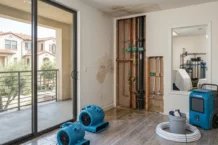
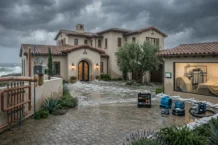
Quick answer: No — if floodwater reached your outlets, breaker panel, or any plugged-in appliance, don’t turn the power back on and don’t touch switches, cords, or the panel with wet hands or while standing on a wet floor. Shut off power only at the main breaker if you can reach it without stepping into water, then leave it off until a licensed electrician has inspected the wiring and a restoration company has dried out the walls and flooring around it. Flooded wiring and panels can look fine and still be dangerous, because corrosion and hidden moisture often cause failures days or weeks after the water recedes.
Why Water and Electricity Are Such a Dangerous Combination After a Flood
Electricity looks for the easiest path to the ground, and water — especially the water from a flood, which is rarely clean — is an excellent conductor. When floodwater rises around a plugged-in appliance, soaks a wall with wiring inside it, or pools at the base of a breaker panel, it creates a path for current to travel somewhere it was never meant to go, including through a person standing on a wet floor. This is why safety guidance from government agencies and utilities agrees on one point: don’t touch electrical devices or appliances while the ground is wet unless you’re certain the power is off, and never go near a panel or breaker with wet hands or while standing on a damp surface.
In San Diego County, this shows up more often than people expect, even without a named storm. A burst water heater in a garage, a slab leak in a laundry room, a sewage backup in a lower-level bathroom, or a January atmospheric river that overwhelms a yard drain can put several inches of water against outlets, appliance cords, and panel boxes in homes from Rancho Bernardo to Santee to La Mesa. Many older San Diego homes, some with original wiring from the 1960s through ’80s, also have panels or sub-panels mounted low in a garage or utility closet, directly in the path of even a modest flood.
The Specific Electrical Risks Flooding Creates in Your Home
Outlets, Switches, and Panels Below the Flood Line
Any outlet, switch, or panel that sat below the water line, even briefly, should be treated as compromised. Water carries dirt, debris, and in many flood and sewage-backup situations, contaminants that accelerate corrosion inside the device. The CDC is direct about this: don’t enter standing water to reach your main power switch, and don’t restore power until electrical devices and circuits have been inspected by a qualified electrician.
Appliances and Anything That Was Plugged In
Water heaters, washers and dryers, refrigerators, furnaces, and anything else plugged in and wet are not safe to simply dry off and reuse. Industry guidance on water-damaged electrical equipment is blunt: equipment submerged or in contact with floodwater generally needs replacement, and trying to “fix” it by air-drying, rinsing, or pressure-washing it creates a hazard rather than solving one. A technician can sometimes recondition larger equipment, but that call isn’t one a homeowner should make alone.
Hidden Wiring Inside Walls, Ceilings, and Subfloors
The wiring you can’t see is often the bigger concern. Floodwater and the moisture it leaves behind can wick into wall cavities, insulation, and subfloors, surrounding wire runs and junction boxes with dampness that isn’t visible from the room. That wiring can look fine on a quick glance and still carry a developing problem, which is why electricians need walls opened and materials dried, not just a visual check, before clearing a space as safe.
Corrosion That Develops Over the Following Days and Weeks
This is the risk most homeowners don’t anticipate. Floodwater typically carries salts and minerals that speed up corrosion in metal contacts, terminals, and connections, and that damage is frequently invisible right after the water recedes. As residual moisture evaporates, it can get pulled deeper into equipment through air pathways and condense again in hidden spots, continuing to corrode connections for days or weeks. A device can run normally for a while after power is restored and then fail later, which is why repeated inspections over the following weeks, not just one look during cleanup, matter so much after any flood that reached electrical components.
When Is It Actually Safe to Re-Enter or Restore Power?
Safety guidance from the CDC, electric utilities, and the Electrical Safety Foundation International (ESFI) lines up on a short list of non-negotiables:
- Don’t enter standing water to shut off power. If reaching your main breaker means stepping into water, don’t do it — call an electrician or your utility instead.
- Never touch a breaker, switch, or outlet with wet hands or while standing on a wet floor. Utilities including Duke Energy and safety groups like ESFI both single this out specifically.
- Don’t restore power until a licensed electrician has inspected the system. This applies even if breakers didn’t trip and nothing looks visibly damaged.
- Stay away from any downed power line, especially near standing water, and assume it’s live until a utility crew confirms otherwise.
- Don’t plug in a portable generator without a properly installed transfer switch. ESFI recommends having a qualified electrician install one; backfeeding power without it can endanger utility line workers and start fires.
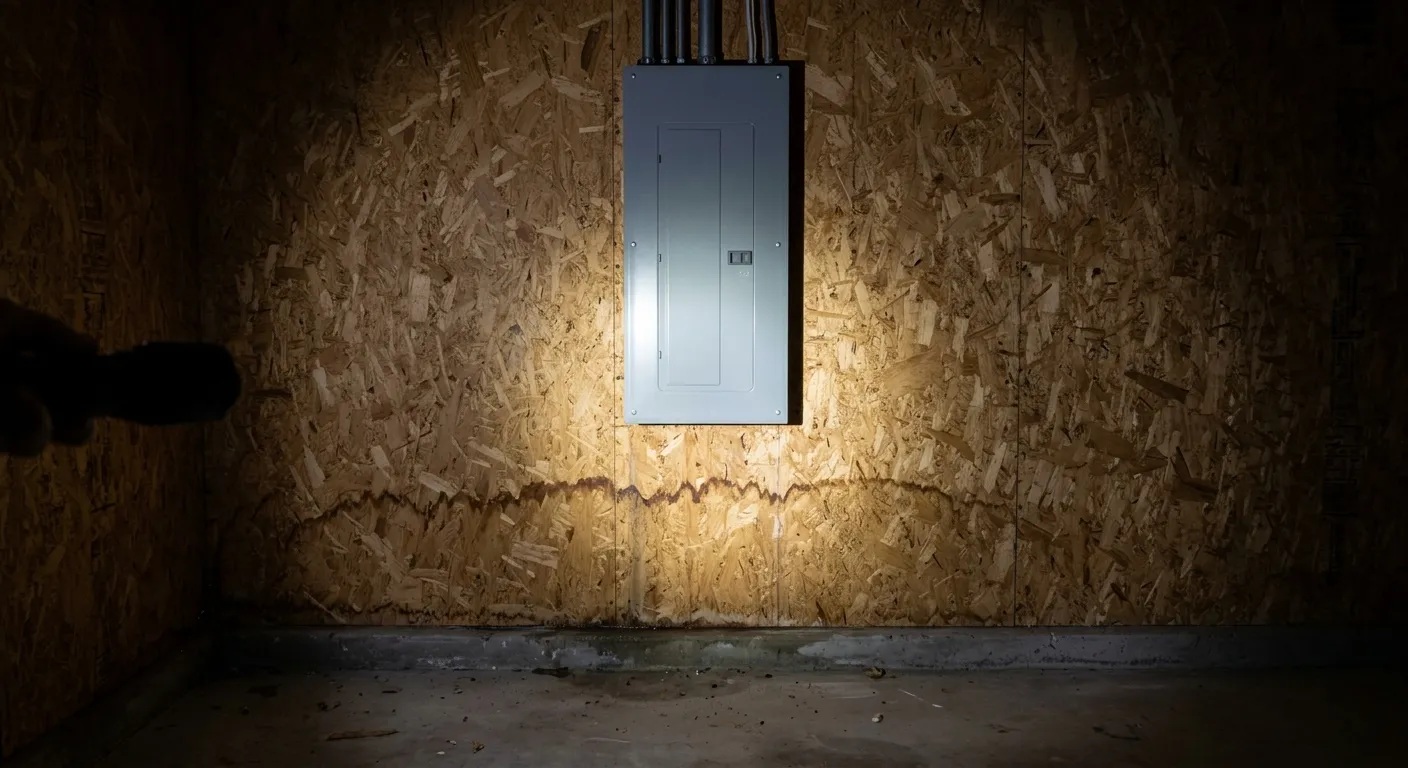
Safe-to-Handle vs. Call-a-Pro: A Quick Reference
| Situation | What It Usually Means |
|---|---|
| Outlet, switch, or appliance that never got wet and is on dry, undamaged circuits | Generally fine to use normally — but still visually check cords and plugs after any nearby water event. |
| Minor dust or residue on a panel cover from humidity, panel itself stayed dry and above any water line | Usually okay once the room is confirmed dry; a quick visual check is reasonable. |
| Outlet, panel, or appliance that sat in or near standing floodwater, even briefly | Call a licensed electrician before touching, plugging in, or resetting anything. |
| Breaker that won’t reset, or trips again immediately after resetting | Stop. This often signals a fault downstream — call an electrician, don’t keep flipping it. |
| Burning smell, visible scorch marks, or warm cover plates anywhere near flooded areas | Shut off power at the main breaker if safely reachable and call an electrician immediately. |
| Wiring behind drywall or flooring in a room that flooded, even if the wiring “looks fine” now | Needs inspection after walls/materials are opened and dried — hidden corrosion isn’t visible from the surface. |
| Any flooding that involved sewage or contaminated water, anywhere near electrical components | Treat as unsafe to touch; call both an electrician and a restoration company for cleanup and testing. |
What You Can Safely Check Yourself vs. When to Call a Professional
There’s a meaningful difference between looking and touching. A homeowner can reasonably do the following:
- Note the height the water reached relative to outlets, switches, and the panel, and photograph it from a dry vantage point.
- Look for which breakers are tripped, without touching a wet panel or stepping into water to reach it.
- Keep a written or photo log of which rooms and fixtures were affected, including appliance model numbers where safely accessible.
- Shut off power at the main breaker only if it’s dry, mounted above the water line, and reachable without standing in water. Otherwise, leave it alone and call for help.
Call a licensed electrician before touching, resetting, or testing any outlet, switch, breaker, or appliance that got wet; before restoring power to any circuit that served a flooded area, even if it “seems fine”; before deciding whether an appliance can be reconditioned or needs replacement; and immediately if you notice a burning smell, a warm outlet or switch plate, flickering lights, or a breaker that keeps tripping.
Call a water damage restoration company at the same time for anything involving standing water, wet drywall or insulation around wiring, contaminated or sewage-affected water, or thorough documentation for an insurance claim.
Why Electrical Inspection and Water Damage Restoration Have to Happen Together
An electrician can test and clear a circuit, but can’t make a damp wall cavity dry, and a restoration company can dry a structure but isn’t licensed to clear wiring as safe to re-energize. The two jobs overlap: drywall, insulation, and flooring often need to come out around affected wiring so an electrician can actually see wire runs and junction boxes instead of guessing from behind a closed wall. Meanwhile, wiring left enclosed in damp cavities keeps the corrosion process described above moving forward, out of sight, for as long as that moisture is trapped. Getting the structure genuinely dry, not just surface-dry, is part of what makes an electrical inspection meaningful rather than a formality. It’s also where moisture risk overlaps with mold risk: wet insulation and framing around wiring is a mold concern as much as an electrical one, which is why one company handling moisture detection, drying, and mold prevention alongside the electrical trade tends to produce a safer outcome than treating them as unrelated projects.
How This Ties Into Your Insurance Claim
Electrical damage from flooding is where documentation matters most, because the hazard often isn’t visible to an adjuster who shows up afterward. Before anything is touched, dried, or discarded, photograph the water line relative to outlets and the panel, and any wet appliance, with timestamps if possible. Keep the written inspection report from your electrician and the moisture readings and drying log from your restoration company; most policies expect proof that damage was mitigated promptly and assessed by qualified professionals, not just a description after the fact. Don’t discard a water-damaged appliance, cord, or panel component before it’s photographed and, if your electrician recommends it, before your insurer has reviewed it. This paperwork is often what separates a smooth claim from a disputed one.
Frequently Asked Questions
Can I just dry out a wet outlet or appliance and use it again?
No. Equipment that was submerged or contacted floodwater isn’t made safe by air-drying, rinsing, or cleaning — that can mask damage rather than fix it. Have an electrician inspect it; some items can be reconditioned, but many need replacement.
My breakers didn’t trip when my garage flooded — does that mean the electrical system is fine?
Not necessarily. A breaker not tripping only means the fault wasn’t large enough to trip it at that moment; it doesn’t rule out corrosion developing inside outlets or the panel over the following weeks, which is why an inspection is still recommended.
Is it safe to flip the main breaker off myself if my house is flooding?
Only if you can reach the dry panel without stepping into water. If reaching it means walking through standing water, don’t attempt it; call an electrician or your utility instead, and never touch a breaker with wet hands.
How long after a flood can electrical problems still show up?
Corrosion from contaminated floodwater can keep developing for weeks, since trapped moisture inside equipment and wall cavities doesn’t always evaporate quickly. A single inspection right after cleanup isn’t always enough; a follow-up check weeks later can catch problems that weren’t present yet.
Do I need both an electrician and a restoration company, or just one?
Both, if floodwater reached electrical components. An electrician determines what’s safe to re-energize, repair, or replace; a restoration company removes standing water, dries materials, and addresses mold risk. Skipping either leaves a gap in the work.
What if the flooding involved a sewage backup instead of clean water?
Treat it as higher risk. Contaminated water speeds up corrosion and adds health hazards on top of the electrical ones, so avoid touching anything electrical in the area and bring in a restoration company experienced with sewage cleanup alongside your electrician.
Why San Diego County Homeowners Call Gold Coast Flood Restorations
Gold Coast Flood Restorations has spent more than 35 years handling water damage, sewage backups, and the moisture and mold problems that follow throughout San Diego County, from Carlsbad and Encinitas to El Cajon, La Mesa, and Rancho Santa Fe. We’re the only water damage and mold remediation contractor in San Diego certified by ToFixIt, and as a Christian-owned company, we give honest, straightforward assessments instead of manufacturing problems to run up a bill, something we’ve been recognized for on Channel 10 News. When floodwater reaches your electrical system, we work alongside licensed electricians, handling the water extraction, structural drying, and mold prevention that make an electrical inspection actually mean something, 24/7.
If floodwater has reached your outlets, panel, or appliances, call Gold Coast Flood Restorations now for 24/7 help and ask about our $50 discount on your first service call.
Sources consulted for the safety guidance in this article: Centers for Disease Control and Prevention, electrical safety guidance for flood recovery (stacks.cdc.gov); Duke Energy, “Flooding and Electrical Safety” (duke-energy.com); Schneider Electric, “Water-Damaged Electrical Equipment” storm response FAQ (se.com); Electrical Safety Foundation International, “Flood Electrical Safety: High Water, High Stakes” (esfi.org); GES Repair, “Hurricane Flooding: How to Prevent Corrosion-Related Failures to Electrical Systems” (blog.gesrepair.com). This article is general safety information, not a substitute for an on-site inspection by a licensed electrician.