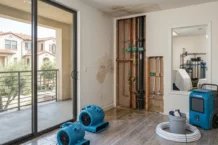
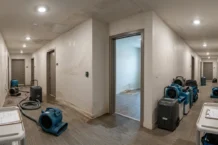
Quick answer: Yes. Your HVAC system is supposed to be one of your home’s main defenses against indoor humidity, but a neglected one can become the opposite. A clogged condensate drain line, a dirty evaporator coil, or an oversized air conditioner that cools the air without removing enough moisture can all push indoor humidity past the 50-60% range where mold starts to grow, then circulate mold spores through every room on the duct system. In San Diego’s marine-layer climate, where outdoor humidity stays elevated even when temperatures are mild, this is often the hidden cause behind a musty smell, foggy-feeling rooms, or mold that keeps coming back after you’ve cleaned it.
If you’ve noticed a musty smell when your air conditioner kicks on, water stains near a ceiling vent, or mold that reappears no matter how many times you scrub it off a bathroom wall, your HVAC system is worth a close look before you blame the weather. Heating and cooling equipment is built to control both temperature and humidity, but a system that isn’t maintained — or was never sized correctly for the home in the first place — can work against you, adding moisture to the air it’s supposed to be drying out. For homeowners across San Diego County, from coastal communities like La Jolla, Del Mar, and Solana Beach to inland neighborhoods such as Poway, Santee, and El Cajon, this is a bigger issue than most people realize, because our marine-layer climate already keeps outdoor humidity higher than mild temperatures would suggest.
How Your HVAC System Can Create Indoor Moisture Problems
Three mechanisms account for most HVAC-related moisture and mold calls we see across San Diego County.
1. Clogged or Overflowing Condensate Drain Lines
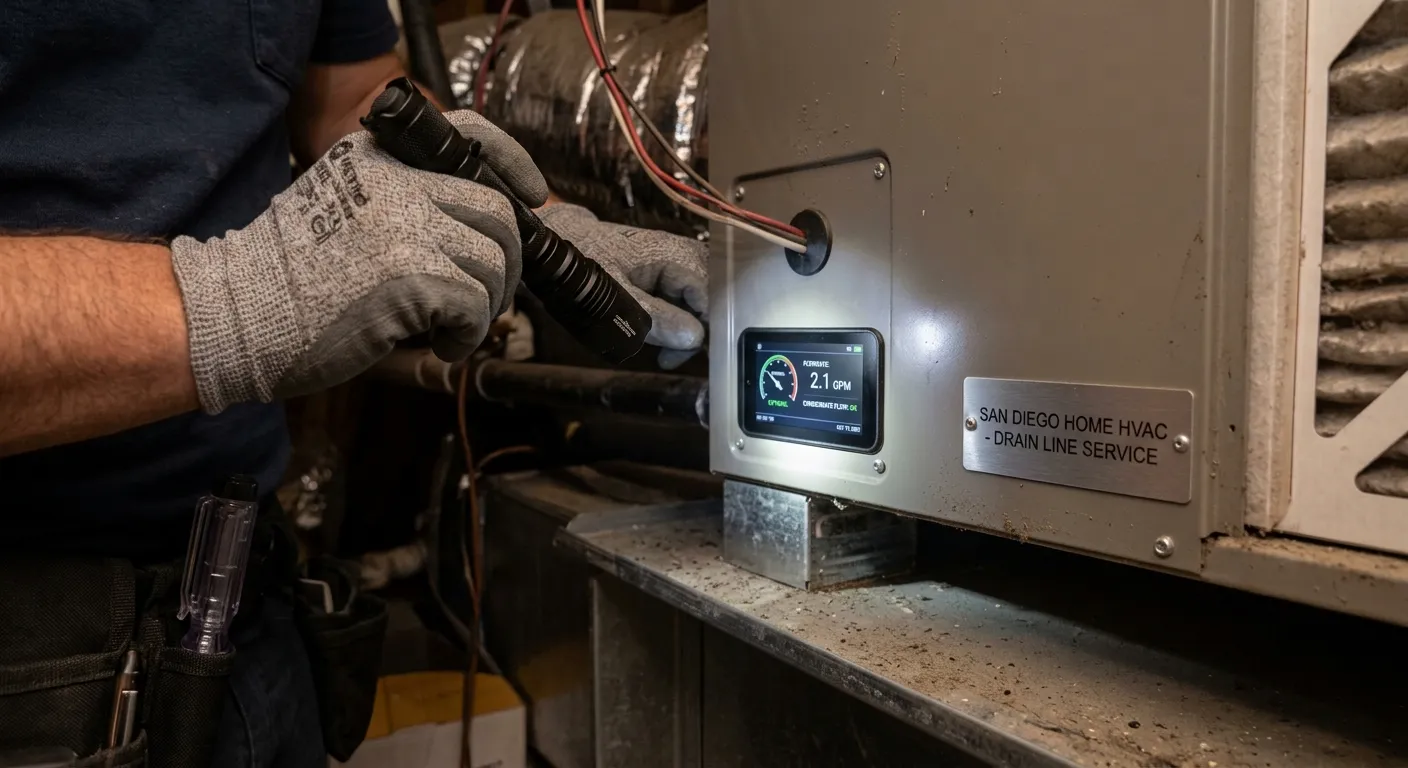
Every time your air conditioner runs, the evaporator coil pulls moisture out of the air as part of normal cooling. That water is supposed to collect in a drain pan and leave the system through a small condensate drain line. Over time, dust, dirt, and biological growth narrow that line until it clogs. Once it does, water backs up into the drain pan and can overflow into the attic, a ceiling cavity, or the closet where the air handler sits. According to HVAC manufacturer Trane, standing water in a blocked drain pan or line is also enough on its own to grow mold, and because that pan sits directly in the airflow path, spores can be pulled into the airstream and distributed through every supply register in the house. (If your line is actively leaking or was misrouted and is causing visible water damage right now, that’s a related but distinct repair issue — see the FAQ below for how the two differ.)
2. Oversized or Poorly Maintained Air Conditioners That Over-Cool Without Dehumidifying
Air conditioners remove humidity as a byproduct of running long enough to finish a full cooling cycle. An oversized unit — common when a system gets replaced with “the next size up” instead of one sized to the home’s actual load — cools the air to the thermostat setpoint so fast that it shuts off before it has run long enough to pull much moisture out. HVAC contractors call this short cycling, and the result is a home that feels cold but still damp, sometimes described as a “sticky, clammy” indoor environment even with the AC working hard. The cold supply air from an oversized or poorly maintained system can also drop ductwork and nearby surface temperatures below the dew point of the surrounding humid air, so condensation forms on duct exteriors and supply boots — hidden moisture that soaks insulation and feeds mold inside wall cavities and attics without ever being noticed from the living space.
3. Dirty Evaporator Coils That Grow and Spread Mold
The evaporator coil is cold and wet every time your AC runs, making it an ideal mold habitat once it’s coated in dust, especially when a dirty filter restricts airflow across it. A moldy coil has a direct path into the supply air every time the blower turns on, which is why mold here spreads spores through every room on the system rather than staying confined to the AC closet. This is also the most common source of the musty “dirty sock” smell many San Diego homeowners notice the first time they turn the AC on after it’s been idle.
San Diego’s Marine Layer Adds a Local Twist
Homeowners in humid Southeast or Gulf Coast climates run their AC nearly nonstop through summer, which removes a lot of indoor moisture as a side effect. San Diego doesn’t work that way. The National Weather Service notes that our region’s marine layer season peaks in spring, when cold ocean water creates a temperature inversion that traps cool, moist air near the coast as fog and low clouds — a pattern that eases by July and August as the ocean warms. That means relative humidity along the coast stays elevated for long stretches even while temperatures sit in the comfortable 60s and 70s. Because it rarely gets hot enough to trigger long AC run times here, the natural moisture-removing side effect of air conditioning happens far less often than in more humid parts of the country — so your home relies more on a well-maintained system, good ventilation, and humidity-smart habits to stay below the 50% indoor relative humidity the EPA recommends. Coastal neighborhoods like La Jolla, Carlsbad, Encinitas, Solana Beach, and Carmel Valley feel this most directly, but inland communities such as Poway, Rancho Bernardo, and Santee get their own version when overnight marine-layer moisture pushes inland and mixes with closed-up, poorly ventilated homes.
HVAC Maintenance Tasks and the Moisture/Mold Risk Each One Prevents
| Maintenance Task | Moisture/Mold Risk It Prevents |
|---|---|
| Change the air filter every 30-90 days | A wetter, colder evaporator coil, which encourages coil mold and weaker humidity removal |
| Flush or vacuum the condensate drain line once or twice a year | A clogged line backing up into the drain pan and overflowing into attic, ceiling, or closet drywall |
| Schedule a professional AC tune-up annually | A dirty coil or slow drain going unnoticed until it causes water damage or mold |
| Verify correct AC sizing (load calculation) before replacement | An oversized unit that short-cycles, leaving the home cold and humid at once |
| Insulate and seal ductwork, especially in attics and crawlspaces | Duct surfaces dropping below the dew point and sweating onto insulation or framing |
| Track indoor relative humidity with a hygrometer (target 30-50%) | General mold growth; EPA guidance notes mold becomes likely above roughly 60% RH |
| Run bathroom and kitchen exhaust fans vented to the outside | Localized humidity spikes from showers and cooking the HVAC alone won’t catch |
| Have the drain line’s slope and trap checked after any HVAC work | Improper routing that invites standing water and repeat clogs |
What You Can Do Yourself vs. When to Call a Pro
Homeowner-Level Maintenance
Most homeowners can handle the basics. Replace filters on schedule, and check with an HVAC tech before jumping to a higher-MERV filter, since an overly restrictive one can choke airflow on an older system. During cooling season, check the condensate drain pan and line access point monthly for standing water. Keep a hygrometer somewhere central and aim for 30-50% relative humidity. Keep furniture and rugs away from supply and return vents, and pay attention to any musty smell when the AC first kicks on after sitting idle — that’s an early warning sign, not a fluke.
When to Call an HVAC Technician
Bring in a licensed HVAC technician for an annual tune-up that includes coil cleaning, a drain line inspection or flush, and a refrigerant and airflow check. Also call one if your AC shuts off quickly after starting (short cycling), if the house never “catches up” on humid, overcast days, or if you’re replacing a unit and want it sized to your home’s actual load rather than matched to the old one’s tonnage.
When to Call a Water Damage and Mold Remediation Pro
An HVAC technician can fix the mechanical cause — the clog, the oversized equipment, the dirty coil — but fixing the cause doesn’t remove mold that has already grown or account for spores already spread through your ductwork. Call a restoration and mold remediation company when you see visible mold on a coil, in ductwork, or on a ceiling or wall near a vent; when a musty smell persists even after HVAC service; when you notice water staining, sagging drywall, or warped flooring near the air handler; or when you simply want mold inspection and testing to confirm the scope of a problem before anyone starts cleanup.
Signs Your HVAC System May Already Be Contributing to a Moisture Problem
- A musty odor when the AC first kicks on, even if it fades after a few minutes
- Water stains on ceiling drywall or tiles near vents or the air handler closet
- Visible condensation on ductwork, supply boots, or the AC closet door
- Mold that keeps coming back in the same spot after cleaning
- Rooms that feel clammy even though the thermostat shows the AC is running
- Higher-than-normal utility bills alongside any of the above, often a sign of short cycling
One of these alone might be minor. Two or three together, especially a recurring musty smell plus visible staining, are worth a professional look before the problem spreads further through the duct system.
Frequently Asked Questions
How do I know if my AC’s condensate drain line is clogged?
Watch for water pooling around the indoor air handler, a musty smell when the AC runs, or the system shutting off unexpectedly — many units have a safety float switch that stops cooling when the drain pan fills. A slow drip or standing water at the drain line’s access port is another clear sign.
What indoor humidity level actually prevents mold?
The EPA recommends keeping indoor relative humidity between 30% and 50%, and no higher than 60%, since mold growth becomes much more likely above that threshold, even without a visible leak anywhere in the home.
Can a new, bigger AC fix my San Diego home’s mold problem?
Not necessarily, and it can make things worse. An oversized unit cools a room to the thermostat setpoint so fast that it shuts off before removing much humidity, leaving the air cold but still damp. Correct sizing, based on a load calculation rather than the old unit’s tonnage, matters more than raw cooling capacity.
Is this the same thing as a condensate line leak?
Not exactly. A condensate line that’s actively leaking or was misrouted so it drips directly into a ceiling or wall is a water-damage event that needs a prompt fix. This article covers the broader maintenance and humidity-control role of your HVAC system — a system can push indoor humidity up and feed mold growth even when the drain line isn’t actively leaking at all.
Why does my house feel humid even though the AC is running in San Diego?
Along the coast and during marine layer season, outdoor humidity stays elevated even when temperatures are mild, so the AC doesn’t run long enough or often enough to pull much moisture out of the air. A dirty filter, dirty coil, or oversized unit makes this worse, since each one reduces how effectively the system dehumidifies while it does run.
How often should I have my AC professionally serviced to prevent mold?
Once a year, ideally before your heaviest cooling months. A typical tune-up includes cleaning the evaporator coil, flushing or inspecting the condensate drain line and pan, and checking refrigerant charge and airflow — all of which affect how well the system controls humidity, not just temperature.
Why Gold Coast Flood Restorations
Gold Coast Flood Restorations has spent more than 35 years helping San Diego County homeowners solve water damage and mold problems at the source, not just the symptom. We’re the only water damage and mold remediation contractor in San Diego certified by ToFixIt, and as a Christian-owned company, we’ve built our reputation on honest assessments — we’ll tell you plainly when a problem is really an HVAC issue that needs a technician rather than a remediation crew, and we will never invent damage that isn’t there. Our restoration work across San Diego County, from Rancho Santa Fe to Scripps Ranch to Mira Mesa, has even been featured on Channel 10 News. If musty smells, recurring mold, or water staining near your air handler have you wondering about your HVAC system, we offer mold inspection and testing to find out for sure, and we’re available 24/7 throughout San Diego County.
Call Gold Coast Flood Restorations today for a free assessment — new customers get $50 off their first service call.
Sources: U.S. Environmental Protection Agency, mold and moisture control guidance (“A Brief Guide to Mold, Moisture, and Your Home” / EPA Mold Course), epa.gov; Trane Residential, “How to Protect Your HVAC System From Mold,” trane.com; FL HVAC Services, “How Oversized AC Equipment Causes Short Cycling, Wastes Energy & Increases Discomfort,” flhvacservices.com; National Weather Service San Diego, reported via FOX 5 San Diego, on the region’s marine layer season and coastal temperature inversion. Provided for general education; HVAC specifics vary by equipment and should be confirmed with a licensed technician.