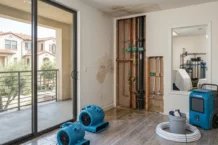
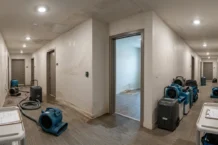
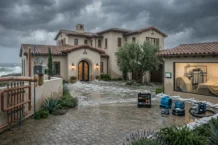
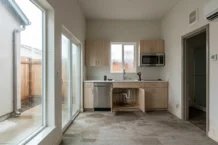
San Diego County is in the middle of the biggest accessory dwelling unit boom the region has ever seen. Countywide, ADU permits jumped 247% between 2020 and 2024 — from 1,150 to 3,991 in a single year — and completed units rose 480% over the same stretch, according to UC San Diego’s Center for Housing Policy and Design. In the City of San Diego alone, more than 2,285 ADUs were permitted in 2024, now roughly a fifth of all new housing built in the city. Encinitas, Carlsbad, Chula Vista, and Vista rank among the county’s most active ADU jurisdictions outside the city itself, and inland cities like El Cajon and La Mesa are seeing steady garage-conversion and backyard-unit activity for rental income or space for aging parents and adult children.
That boom is great for housing supply — but it also means thousands of new roof lines, slab foundations, and plumbing tie-ins have gone in across the county in just a few years, many built fast to hit a 60-day permit review window. At Gold Coast Flood Restorations, we’ve spent 35+ years responding to water damage and mold calls across San Diego County, and ADUs are increasingly where we find problems a main house simply doesn’t have in the same way.
Two ADU Types, Two Very Different Risk Profiles
Not every ADU fails the same way. The two most common types in San Diego County — garage conversions and new detached builds — carry almost opposite sets of water damage risks.
Garage Conversion ADUs: Minimal Waterproofing Built In
A garage was never designed to be a bedroom. Garage slabs are almost never poured with a vapor barrier underneath, because a garage floor only ever needed to shed an occasional rain puddle, not stay dry under carpet or drywall. When that slab gets converted into living space, ground moisture keeps migrating upward through the concrete exactly like it always did — it just now has flooring and framing sitting on top to soak into. Industry guidance on garage conversions flags this rising moisture as the single most destructive force in a conversion project, causing mold, rotting baseboards, and slow structural decay that isn’t visible until a musty smell shows up.
The former garage door opening is another weak point. That wall gets framed in and sided, but if it isn’t properly flashed where it meets the existing slab and roofline, wind-driven rain can work its way in during San Diego’s wet-season storms. Add exterior grading that was never regraded to slope away from the old garage — assuming it would still handle incidental water — and you have a section of the house that channels water toward the building instead of away.
New Detached ADUs: Fresh Construction, Fresh Problems
Brand-new backyard ADUs avoid the “garage never meant to be a bedroom” problem, but new construction has its own failure points on compressed build schedules. Home inspection data flags three recurring defect categories: improper foundation grading that lets water pool against the slab, roof flashing installed incorrectly around vents and roof-to-wall transitions, and drainage pipes with insufficient slope that lead to clogs and backups. On a small ADU footprint, these aren’t minor — a compact unit has less roof and foundation perimeter overall, so one flashing or grading mistake affects a larger share of the building’s total water-management system than the same mistake on a full-size home.
The Hidden Risk: Shared Plumbing and Sewer Lines
This is the risk factor that catches the most San Diego County homeowners off guard. Many ADUs — especially garage conversions and smaller detached units — tie into the main house’s existing sewer lateral and water line rather than running a separate connection to the street. Plumbing industry guidance on ADU construction is blunt: older Southern California homes “were not designed to handle additional tie-ins,” and undersized sewer laterals, water pressure drops, and elevation problems requiring pumps or backflow devices are common when a second unit’s plumbing loads onto a line sized for one household. Some jurisdictions now require a dedicated sewer connection for new ADUs — but plenty of existing conversions and older retrofits were never built to that standard.
In practice, a clogged or slow-draining line in the ADU bathroom can be the first sign of a problem in the main house’s sewer lateral, and a backup in the main house can push sewage into the ADU’s lowest fixtures. Because the two structures are plumbed together, a “just the ADU” backup call often turns out to be a shared-line issue that needs tracing at the point where the two systems join.
Poor Drainage Grading Around New Slab Foundations
Detached ADUs are almost always built as slab-on-grade structures, and the grading around that slab determines whether rainwater sheds away from the foundation or pools against it. Full-size homes typically have room to establish a gradual slope away from the structure. A backyard ADU squeezed into a side yard or rear setback often has only a few feet of usable grading space between the new foundation and a fence, retaining wall, or the main house. When that limited space isn’t graded correctly, water has nowhere to go except toward the slab edge, where it seeps beneath sill plates and wicks into framing over successive storms.
Tight Ventilation in Compact Units Traps Moisture
Square footage limits on San Diego ADUs — generally up to 1,200 square feet detached, with junior ADUs capped at 500 square feet — mean these units pack a kitchen, bathroom, laundry, and living space into a fraction of a typical home’s footprint. Every room produces moisture, but the smaller envelope has proportionally less attic and crawlspace volume to vent it out. California code sets minimum ventilation rates for this reason, but ADUs relying on a ductless mini-split or a single bathroom exhaust fan — rather than a whole-unit ventilation strategy — can still trap humidity in wall cavities and tight attic spaces, particularly in units built airtight for efficiency. That trapped humidity is a slow, quiet mold risk — a musty smell or dark specks in bathroom corners, weeks after move-in.
Roof Flashing Issues on New ADU Construction
Flashing — the metal or membrane installed at every roof penetration, valley, and wall transition — is one of the most common failure points on any new roof, and ADU roofs are no exception. New construction defect data consistently calls out improperly installed flashing around vents, chimneys, and roof-to-wall intersections as a leading cause of leaks in newly built homes. On an ADU, the roof often ties into a fence line, the main house’s wall, or a covered patio, creating extra flashing transitions in a small roof area — a detail that’s slightly off can leak for months into insulation and ceiling drywall long before a visible stain appears indoors.
Garage Conversion vs. New-Build ADU: Risk Factors at a Glance
| Risk Factor | Garage Conversion ADU | New Detached ADU |
|---|---|---|
| Foundation moisture | High — original slab usually has no vapor barrier | Low if built to current code, but grading errors can offset this |
| Exterior grading | Often unchanged from original garage; may slope toward the unit | Depends heavily on tight side-yard/rear-setback grading |
| Roof flashing | Existing roofline reused; new penetrations for vents/mini-splits | Brand-new roof with multiple fresh flashing details |
| Plumbing/sewer connection | Frequently shares the main house’s existing lateral | May share or may require a dedicated line, depending on jurisdiction |
| Ventilation | Retrofit HVAC/exhaust into an existing envelope | Designed in, but often minimal (mini-split + one exhaust fan) |
| Former garage door opening | Common leak point if flashing/sealing is incomplete | Not applicable |
| Typical hidden-damage timeline | Months to years (slow slab moisture) | Weeks to months (grading/flashing leaks after first storms) |
What Homeowners Can Do vs. When to Call a Pro
What you can check yourself
- Walk the ADU’s perimeter after a rain and look for water pooling against the foundation.
- Check the former garage door wall (conversions) and roof penetrations (new builds) for staining or soft drywall.
- Run every fixture in the ADU and watch the main house’s water pressure and drain speed for change.
- Sniff test: a persistent musty smell in an ADU bathroom or under-sink cabinet is a strong early mold indicator.
- Check permit records for whether the sewer lateral is shared with the main house — it changes how you treat any future drain issue.
When to call a professional
Any visible water intrusion, a musty odor that won’t clear, a sewage backup affecting either structure, or a slab that tests damp near the former garage door threshold all warrant a professional inspection rather than wait-and-see — mold can colonize behind drywall within 24-48 hours of sustained moisture. Because ADUs so often share plumbing infrastructure with the main house, a problem that looks isolated to the smaller unit can actually originate at the shared connection point, something a homeowner can’t trace without a camera inspection or moisture meter.
Frequently Asked Questions
Are garage conversion ADUs more likely to have mold than new detached ADUs?
Generally, yes, at least in the first few years — garage slabs typically lack a vapor barrier, so moisture wicks continuously into flooring rather than as a single leak event. New detached ADUs avoid that problem but bring their own risks from grading and flashing installed under a rushed build schedule.
If my ADU has a plumbing leak, can it affect my main house?
It can, especially if the two structures share a sewer lateral or main water line, which is common in San Diego County garage conversions and older retrofits. A clog or backup at the shared connection point can push wastewater toward whichever fixtures sit lowest, in either building.
How do I know if my ADU’s sewer line is shared with the main house?
Check your ADU permit records with the county or city, or ask the contractor who built it. If you can’t confirm it and you’re seeing slow drains or backups, a camera inspection of the lateral is the most reliable way to find out.
What’s the first sign of hidden water damage in a new ADU?
A musty smell, especially in a bathroom, closet, or under a kitchen sink, is usually the earliest sign — it often shows up before any visible staining. Foggy windows or slightly soft drywall near a roofline or the former garage door opening are the next signs to watch for.
Do new ADUs need different waterproofing standards than a garage conversion?
Both are subject to current California building code, including moisture barriers and ventilation minimums. A conversion retrofits protections into a structure not originally built for them, while a new ADU is designed in from the start — but design intent and correct field installation aren’t always the same.
How quickly should I act if I suspect water damage in my ADU?
As soon as possible. Mold can begin colonizing damp material within 24-48 hours, and because ADUs often share systems with the main house, a delay can let a contained issue spread into the primary residence. Gold Coast Flood Restorations offers 24/7 response across San Diego County for this reason.
Why Gold Coast Flood Restorations
We’ve served San Diego County for more than 35 years and are the only water damage and mold remediation contractor in San Diego certified by ToFixIt. As a Christian-owned, integrity-focused company featured on Channel 10 News, we give honest assessments and never fabricate problems — which matters most on ADU calls, where the real issue often traces back to a shared plumbing line rather than the isolated unit a homeowner first calls about. Whether you have a garage-conversion granny flat in El Cajon or La Mesa, or a new backyard ADU in Encinitas or Carlsbad, we know how these structures fail differently. Call us today, 24/7, for a fast, honest ADU inspection — and ask about our $50 discount on your first service call.