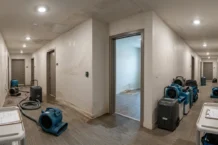
Quick answer: Moisture builds up inside a wall cavity when warm, humid air meets a colder surface inside the wall — such as an uninsulated cold-water pipe or the back side of exterior sheathing — and condenses, or when a slow plumbing seep wicks into insulation without ever soaking through the drywall face. Because the cavity sits sealed between drywall on one side and a largely non-breathing exterior finish on the other, this moisture can cycle for weeks or months with no stain, no smell, and no obvious sign — and by the time it does surface, mold has usually already colonized the wall framing and insulation. San Diego County’s stucco-clad, slab-on-grade homes are especially prone to this pattern because stucco stores and releases water inward and most wall cavities have no real way to dry out.
This Is Different From a “Wet Wall” After a Leak
If a supply line bursts or a washing machine hose fails, the damage announces itself: water on the floor, a spreading stain across drywall, a baseboard that’s visibly swollen within hours. That kind of visible wall water damage is its own emergency, and it’s a topic Gold Coast Flood Restorations covers elsewhere on this site.
This article is about something quieter. It’s the moisture that accumulates inside the wall cavity — behind the drywall, inside the insulation, against the back of the exterior sheathing — without ever producing a puddle or an obvious leak to point to. According to EPA mold remediation guidance, hidden mold routinely grows “on the back side of drywall, wallpaper, or paneling” and other spots occupants never see, often with the visible face of the wall looking normal while the hidden side is already colonized. That’s the scenario homeowners describe when they call asking why their wall “just feels off” even though nothing has ever leaked that they know of.
How Moisture Gets Inside a Wall Cavity Without Ever Reaching the Surface
Condensation on Cold Pipes and Cold Wall Surfaces
Every wall cavity has a temperature gradient between the warm, humid indoor air and the cooler air or cooler building materials on the other side. When humid air inside the cavity contacts a surface colder than its dew point, water condenses directly onto that surface — the same way a cold glass of water sweats on a warm day. Building Science Corporation’s Joseph Lstiburek, writing in Building Science Insight 049, makes the point that condensation in a wall assembly concentrates at specific cold surfaces rather than spreading evenly through the insulation — his own test photos show frost forming on the back side of wall sheathing, not in the middle of the batt. Inside a house, the same physics shows up on an uninsulated cold-water supply line, an air conditioning refrigerant line, or the inside face of an exterior wall’s sheathing on a cool, humid night. The water doesn’t come from a leak at all — it condenses out of the air that’s already inside the cavity.
Vapor Intrusion Through the Wall Assembly Itself
Walls don’t just hold moisture that’s already inside them; they can also pull moisture in from outside through the cladding. Stucco is what building scientists call a “reservoir cladding” — like brick, it absorbs rainwater into its own mass and holds it there. As the Dörken Delta Academy’s technical guidance on stucco failure explains, that stored water doesn’t just sit in the stucco; it’s driven inward, particularly when the sun heats a damp, rain-soaked wall and pushes vapor toward the cooler, drier interior. Whether that becomes a problem depends on what’s directly behind the stucco. Without a drainage gap or weather-resistive barrier doing its job, moisture can migrate straight into the insulation and framing with no visible path to the room side of the wall — which is why this kind of intrusion can run for a long time before anyone notices.
Slow Plumbing Seepage That Insulation Absorbs Before Drywall Ever Gets Wet
A pinhole leak in copper pipe, a slowly failing shower pan liner, or a loose slip-joint under a tub surround doesn’t always produce enough water to soak through half-inch drywall quickly. Instead, that slow seep tends to find the path of least resistance — often straight into fiberglass or cellulose insulation, which can hold a surprising amount of water before it wicks far enough to visibly darken a wall surface. EPA’s guidance on hidden mold specifically flags pipe chases and leaking or condensing pipes as common hiding spots for this reason: the moisture source is inside the wall, and the drywall face is often the last thing to show it, not the first.
Why San Diego County Homes Are Especially Prone to This Hidden Pattern
Hidden wall-cavity moisture can happen in any climate, but several features common to San Diego County’s housing stock make it a more frequent issue here than homeowners expect from a region known for mild, dry weather.
Stucco Exteriors With Little to No Drainage Gap
Stucco is the dominant exterior finish on wood-framed homes across San Diego County, and for decades the standard installation method applied stucco directly over paper-backed lath with no dedicated drainage space behind it. As the reservoir-cladding issue above describes, that design works fine as long as nothing goes wrong at a window, a crack, or a stucco control joint — but once water gets behind that finish, there’s often no airspace or drainage mat to let it drain back out or dry outward. The moisture’s only easy path is inward, into the wall cavity.
Slab-on-Grade Foundations Route Plumbing Through the Walls, Not Under a Visible Floor
Much of San Diego’s postwar tract housing was built on concrete slab foundations rather than raised foundations with a crawlspace. That means there’s no crawlspace to climb into and check plumbing runs; supply and drain lines for kitchens and bathrooms often run up through wall cavities, out of sight, for their entire length. A slow leak at a fitting inside that wall has nowhere to show itself until it travels far enough to reach drywall, a baseboard, or flooring.
Wall Cavities With Limited Ventilation or Drying Capacity
Modern rainscreen wall assemblies are built to dry out intentionally, with a ventilated gap behind the cladding that lets any moisture that gets in escape as vapor. Most San Diego homes built before these details became common practice don’t have that feature — the wall cavity is effectively sealed between an absorptive exterior finish and an interior vapor-retarding paint or drywall skin, with no engineered way for trapped moisture to leave. Once it’s in, it tends to stay in.
A Marine-Layer Climate That Keeps Indoor Humidity Higher Than People Assume
San Diego’s coastal and inland-valley neighborhoods — Carlsbad, Encinitas, Del Mar, La Jolla, Solana Beach, and much of the city of San Diego itself — sit under a persistent marine layer for a large part of the year. That keeps outdoor humidity elevated even when temperatures feel mild and dry, which keeps indoor relative humidity higher than most homeowners realize, since it’s rarely hot or cold enough to prompt heavy air conditioning or heating that would otherwise dry the air out. That steady, moderate humidity is the condition that lets slow condensation on a cold pipe or cold sheathing accumulate over months instead of flashing off quickly.
Early Warning Signs of Hidden Wall Moisture — and What Each One Usually Means
| What You Notice | What It Usually Means |
|---|---|
| Musty or earthy smell in one room, with no visible mold | Mold or mildew is likely established inside the wall cavity, behind the drywall you can see |
| A small blister, soft spot, or slight bulge in drywall near a plumbing wall | Water has saturated the drywall from behind, often from a slow plumbing leak inside the cavity |
| Baseboard separating slightly from the wall, or trim that feels soft | Moisture is wicking down the inside of the wall and collecting at the bottom plate |
| Paint discoloration or faint yellow-brown “halo” staining on an exterior wall | Vapor or liquid moisture is migrating through the wall assembly from outside, often tied to stucco |
| Hairline cracks or dark staining on exterior stucco after rain | The stucco is likely absorbing and holding water that may be driving inward over time |
| A wall or outlet cover that feels noticeably cool or slightly damp to the touch | Possible condensation forming inside the cavity, often near a cold-water line or AC line |
| Indoor relative humidity consistently reading above 55-60% on a hygrometer | Conditions favor condensation on any cold surface inside wall cavities, pipes, or ducting |
What a Homeowner Can Check vs. When to Call a Professional
What You Can Reasonably Check Yourself
- Walk the exterior after a rain and look for new hairline cracks, dark staining, or soft spots in the stucco, especially around windows, hose bibs, and where decks meet the house.
- Smell-test closets and rooms along exterior walls — a musty smell that comes and goes with weather is worth tracking.
- Check indoor relative humidity with an inexpensive hygrometer; building-science guidance generally points to keeping it in the 30-50% range to limit condensation risk.
- Check under sinks and around tub/shower surrounds for loose caulking, soft cabinet bottoms, or a faint odor — common entry points for slow plumbing seepage.
- Feel exterior walls near plumbing fixtures for spots noticeably cooler or slightly tacky compared to the rest of the wall.
When It’s Time to Call a Professional
- You’ve noticed any sign in the table above but can’t find an obvious source — that’s when moisture is still hidden inside the cavity rather than visible on the surface.
- Your home has its original, decades-old stucco with no known drainage gap or weatherproofing upgrade behind it.
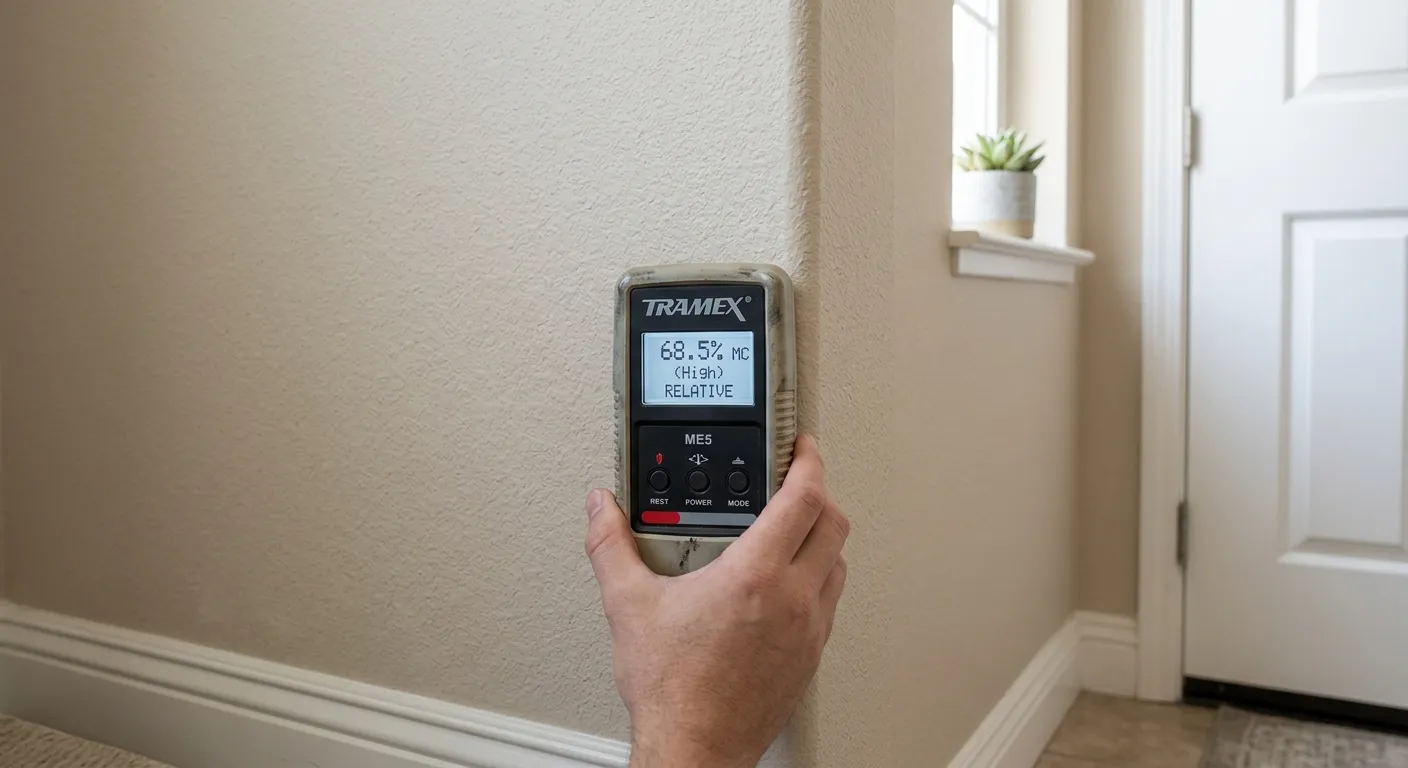
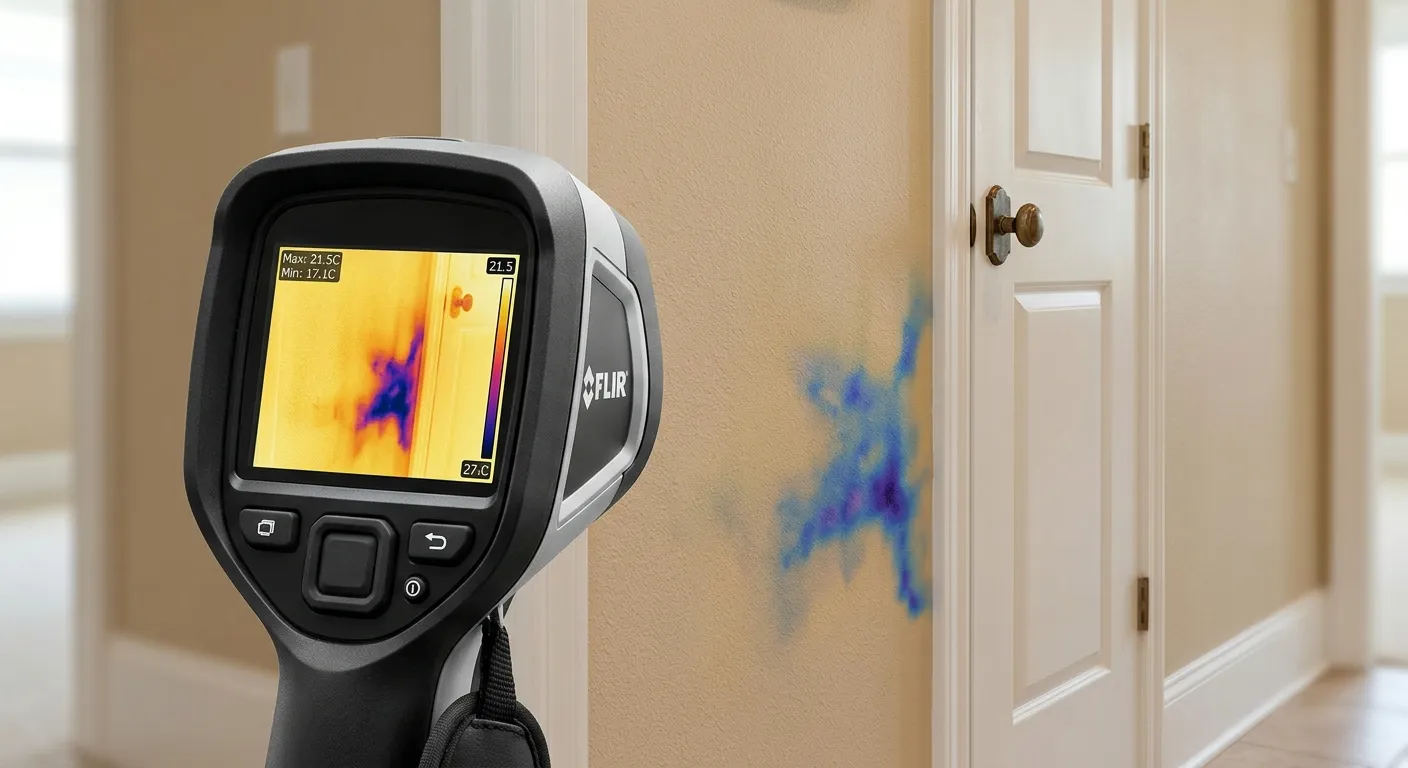
- You need a moisture meter or thermal imaging camera to “see” inside a closed cavity without cutting it open — that equipment takes training to read correctly, since a cold stud or wiring run can mimic a moisture reading.
- You’re buying an older San Diego County home and want a baseline moisture inspection before small issues become expensive ones.
- A musty smell persists even after cleaning every visible surface — a strong signal the source is inside the wall, not on it.
Why Gold Coast Flood Restorations
Gold Coast Flood Restorations has worked inside San Diego County’s walls, attics, and crawlspaces for more than 35 years, which means we’ve seen how this county’s building stock — stucco-clad, slab-built, minimally ventilated — hides moisture longer than homes elsewhere. We’re the only water damage and mold remediation contractor in San Diego certified by ToFixIt, and as a Christian-owned company, our inspections are built on an honest answer, not a manufactured one: if your moisture meter and thermal imaging readings come back clean, we’ll tell you that too. Our team has been featured on Channel 10 News for exactly this kind of no-guesswork assessment, and we’re available 24/7 across Alpine, Carlsbad, Carmel Valley, Del Mar, Encinitas, El Cajon, La Jolla, La Mesa, Mira Mesa, Miramar, Poway, Rancho Bernardo, Rancho Penasquitos, Rancho Santa Fe, San Diego, Santee, Scripps Ranch, Solana Beach, Sorrento Valley, Tierrasanta, and University City.
If something about a wall just feels off, don’t wait for a stain to confirm it — call Gold Coast Flood Restorations for a moisture inspection and get $50 off your first service call.
Frequently Asked Questions
Can mold grow inside a wall before I ever see a stain or discoloration?
Yes. Mold commonly establishes itself on the back side of drywall, inside insulation, or on wall framing well before any sign reaches the painted surface you can see, which is exactly why a musty smell with no visible mold is worth taking seriously.
How does condensation form inside a wall if there’s no leak anywhere?
Humid air inside the wall cavity only needs to contact a surface colder than its dew point — an uninsulated cold-water pipe, an AC line, or the back of cold exterior sheathing — for water to condense directly out of the air, with no plumbing failure involved at all.
Is my stucco home more likely to have hidden wall moisture than other homes?
Often, yes. Stucco absorbs and stores rainwater and can release it inward over time, and many older San Diego County homes have no drainage gap behind the stucco to let that moisture escape outward instead of into the wall cavity.
Can a moisture meter or thermal camera really tell what’s happening inside a closed wall?
Both can detect elevated moisture or unusual temperature patterns inside a wall without opening it up, though interpreting them correctly takes professional experience, since wiring, studs, and insulation gaps can create misleading readings of their own.
How long does hidden wall moisture usually take to turn into a mold problem?
Materials that stay damp for more than about 48 hours create conditions favorable to mold growth, so a slow, ongoing moisture source inside a wall cavity — rather than a one-time wetting — tends to produce an established mold problem well before anyone notices a visible sign.
Will running my air conditioner more help prevent condensation inside my walls?
Keeping indoor relative humidity in a moderate range, generally 30-50%, reduces the chances that humid air inside a wall cavity reaches its dew point on a cold surface — but it won’t address moisture coming from outside through stucco or from a plumbing seep.
Sources referenced: U.S. Environmental Protection Agency, Mold Remediation in Schools and Commercial Buildings (hidden mold growth behind drywall, pipe chases, and condensation guidance); Joseph Lstiburek / Building Science Corporation, Building Science Insight-049: Confusion About Diffusion (condensation concentrating at cold surfaces inside wall assemblies); Dörken Systems Delta Academy, “The Only Way to Avoid Stucco Failure” (stucco as a reservoir cladding and inward vapor drive). These sources inform the general building-science concepts described above; always have a qualified professional evaluate your specific home.