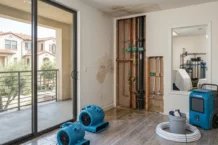
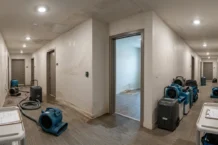
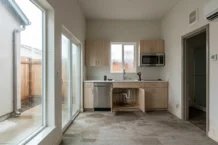
San Diego County’s second-home corridor — Rancho Santa Fe, Del Mar, La Jolla, and Carmel Valley — is full of properties that sit empty for months at a time. Some owners split their year between here and a cooler-climate home elsewhere; others are snowbirds who arrive each fall and leave every spring. Either way, the home sits unattended long enough that a small plumbing failure can become a five- or six-figure claim before anyone notices.
At Gold Coast Flood Restorations, we’ve spent more than 35 years responding to water damage across San Diego County, and the hardest calls to take are from owners who return after months away to a home that’s been quietly flooding since week one. This guide covers why that happens, what to do before you lock the door, and how to keep a leak from going undiscovered.
Why Vacant Homes Suffer the Worst Water Damage
A burst supply line, a failed washing machine hose, or a slow leak at a water heater fitting is manageable when someone is home to hear the drip or smell the mildew within a day or two. The damage stays contained to a wet spot or a few soaked baseboards.
Put that same leak in a home sitting empty for six, eight, or twelve weeks, and the math changes completely. Water keeps moving whether anyone’s watching or not, behind walls and under flooring, until the source runs dry or someone opens the door. Mold can begin colonizing damp materials within 24 to 48 hours, so an owner returning from a winter away often finds warped hardwood, saturated drywall, and active mold growth, not just a leak.
San Diego’s coastal microclimates make this worse. Homes in La Jolla and Del Mar sit close enough to the ocean that persistent humidity accelerates mold growth once a leak starts. Larger estate properties in Rancho Santa Fe and Carmel Valley often have more plumbing runs and irrigation zones, sometimes guest houses — more failure points across more square footage, with nobody there to notice a problem in a wing of the house nobody’s walked through in weeks.

Your Pre-Departure Water Damage Checklist
Run through this list before you close up the house — it takes less than an hour and is the highest-leverage step against a catastrophic claim.
| Task | Why It Matters |
|---|---|
| Shut off the main water supply, or install an automatic shutoff | No incoming water, no supply-line leak. |
| Shut off and drain outdoor hose bibs; disconnect hoses | A hose left attached can trap pressure and cause a bib to fail. |
| Check the water heater for corrosion, drips, or an aging tank (10+ years) | Tank failures are a common source of large, slow leaks in vacant homes. |
| Replace rubber washing machine hoses with braided stainless steel | Rubber hoses degrade and are a leading cause of laundry room floods. |
| Check under every sink and toilet base for existing moisture | A leak already underway gets weeks to worsen if not caught first. |
| Set irrigation to a reduced “vacation” schedule; check for broken heads | A stuck valve can run for months, saturating soil at the foundation. |
| Place leak sensors at water heater, under sinks, washer, HVAC condensate pan | Where slow leaks most often originate. |
| Set the thermostat to hold a stable temperature and humidity range | Reduces condensation and mold-friendly humidity in a closed house. |
| Confirm WiFi/router will stay powered and connected | Smart sensors only help if they can send an alert. |
| Give a trusted neighbor or caretaker a key and a walk-through schedule | Technology can fail silently; a human check-in is the backstop. |
| Notify your homeowners insurance carrier of the extended absence | Many policies require notice past a set number of vacant days. |
Smart Monitoring and Automatic Shutoff for Absentee Owners
A leak sensor that sends a phone notification is useful in an occupied home. In a vacant one, a notification alone isn’t enough — an alert that your Rancho Santa Fe home is flooding does no good if nobody local can respond for days.
Whole-home automatic shutoff systems
These install on the main line and pair flow sensors with a motorized shutoff valve. The system learns your home’s normal water-use pattern and cuts supply the moment it detects an abnormal, continuous flow — the signature of a burst pipe. In a vacant home, where baseline usage is zero, almost any detected flow is worth acting on immediately.
Point-of-use leak sensors
Small battery-powered sensors at the water heater, under sinks, near the washer, and at the HVAC condensate pan detect moisture at common failure points and send a push alert. They’re inexpensive, but don’t stop the flow — pair them with a main-line shutoff for an unattended home.
Cellular backup, not just WiFi
The biggest blind spot in a vacant home with “smart” protection is a system that depends entirely on WiFi and grid power. If power or internet drops for even a few days while you’re away, a WiFi-only system goes dark right when the home is most vulnerable. Cellular or battery-backup connectivity closes that gap.
Remote monitoring through a property manager
Some property managers serving the Rancho Santa Fe, Del Mar, and La Jolla second-home market now offer remote monitoring, routing sensor alerts to a dispatch team instead of an owner in another time zone. Ask your caretaker whether they offer this.
Why a Trusted Neighbor or Property Manager Still Matters
Technology reduces risk; it doesn’t eliminate it. Sensors run on dead batteries, routers lose power, and even a well-functioning shutoff valve can’t undo a leak that’s already saturated a subfloor by the time it trips. Every pre-departure plan needs a real person with a key and a regular schedule, not just an app.
A walk-through every one to two weeks strikes the right balance: run water briefly, check under sinks and the water heater, glance at the irrigation system, and sniff for any musty smell — an early sign of hidden moisture. This is also the visit where dead sensor batteries and dropped WiFi connections get caught, since the system itself won’t announce it’s gone silent.
Whether that’s a neighbor, a house-sitter, or a property manager depends on how long you’re gone — but “nobody’s been inside in ten weeks” is what turns a $500 repair into a $30,000-plus restoration project.
Insurance Vacancy Clauses: What Snowbirds Need to Know
This is the part most owners overlook until it’s too late. Standard homeowners policies are written assuming someone lives in the home and would notice a problem quickly. Most include a vacancy clause that limits or excludes certain coverage — water damage among the most common — once a home has sat unoccupied for a set stretch, typically 30 to 60 consecutive days, depending on the carrier and policy.
If a claim is filed after that threshold and the insurer deems the home “vacant,” coverage can be reduced or denied outright, sometimes discovered only after the damage has happened. Some carriers distinguish “unoccupied” (furnished, utilities on) from “vacant” (largely empty of contents), with different coverage rules for each.
Every policy is different — this is genuinely a matter for your insurance agent, not a restoration contractor — but here’s the general shape of what snowbird owners need to do:
- Read your policy’s vacancy or unoccupancy clause, or have your agent walk you through it.
- Notify your carrier in advance of any absence expected to run past their stated threshold.
- Ask whether a vacancy permit, endorsement, or separate vacant-home policy fits your situation.
- Keep documentation of preventive measures taken (shutoff, monitoring, walk-throughs) — some carriers require them for extended-absence coverage.
None of this is legal or insurance advice — it’s a starting point for the conversation to have with your own agent well before you leave, not after.
What You Can Handle vs. When to Call a Restoration Professional
A caretaker or neighbor can handle much of the prevention side, but once water has gotten into a wall, floor, or ceiling, the situation usually moves past what a homeowner or property manager should handle alone.
What a homeowner or caretaker can reasonably do
- Shut off the main water supply or reset a tripped shutoff valve
- Mop up a small, contained puddle caught early
- Open windows briefly to air out a musty smell (without disturbing the source)
- Replace an obviously failed hose or fitting, if simple and accessible
- Photograph the situation before touching anything, for insurance purposes
When it’s time to call a professional immediately
- Any standing water, saturated flooring, or water stains found on a walk-through, even if the source has stopped
- Any musty odor, since it often means mold is growing behind walls or under flooring, out of sight
- Water damage present for an unknown length of time — true of almost every leak found in a vacant home
- Any sign of water reaching electrical outlets, panels, or fixtures
- Any situation the caretaker isn’t sure about — a phone photo sent for a quick read beats guessing wrong
Mold and structural damage compound the longer materials stay wet, which is why speed matters this much. Moisture mapping, thermal imaging, and industrial drying equipment are often needed to find water that’s traveled beyond the visible wet spot.

Frequently Asked Questions
How long can I leave my vacation home unoccupied before my insurance coverage is affected?
It varies by carrier, but many policies limit or exclude coverage — water damage included — once a home has sat unoccupied for roughly 30 to 60 consecutive days. Check your policy language or ask your agent.
Should I shut off my main water supply completely while I’m away, or just install a smart shutoff?
Either works. Fully shutting off the main valve is simplest if you don’t need water running for irrigation or a housesitter. If you do, a smart shutoff valve is the better middle ground — it monitors flow continuously and cuts water at the first abnormal leak signature.
How often should someone check on my vacation home while I’m gone?
Every one to two weeks is reasonable for most properties, more often for larger estates like many Rancho Santa Fe and Carmel Valley homes. The visit should include running water briefly, checking under sinks and the water heater, and checking for any musty smell.
Do smart water leak detectors work if the power or WiFi goes out while I’m away?
Basic WiFi-only systems stop alerting once power or internet drops — exactly when an unattended home is most at risk. Cellular or battery-backup connectivity is worth the extra cost for a vacant vacation home.
What’s the difference between “vacant” and “unoccupied” for insurance purposes?
Definitions vary, but many carriers treat “unoccupied” as furnished with utilities on and nobody living there, and “vacant” as largely empty of belongings, with different coverage rules for each. Confirm which your policy uses.
I just got back from being away and found water damage — what should I do first?
Photograph everything before touching it, shut off the water source if it’s still active, and call a restoration company right away. Since you don’t know how long the leak ran, mold is a real possibility even if the standing water looks minor.
Why Gold Coast Flood Restorations
We’ve served San Diego County for more than 35 years, and a meaningful share of that work is exactly this scenario: an owner in Rancho Santa Fe, Del Mar, La Jolla, or Carmel Valley returns from an extended absence to find a leak that’s been running unnoticed for weeks. We’re the only water damage and mold remediation contractor in San Diego certified by ToFixIt, and as a Christian-owned, integrity-focused company, we give honest assessments, never what pads a bill — part of why we’ve been featured on Channel 10 News. We’re available 24/7, whether you’re local or a snowbird, and we offer $50 off your first service call.
Own a vacation or second home in San Diego County? Call Gold Coast Flood Restorations to build a monitoring plan before your next absence, or for a fast, honest assessment if you’ve already found damage.