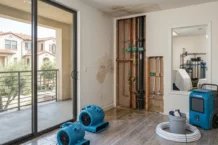
The short answer: the most reliable early signs of a slab leak are an unexplained jump in your water bill, the sound of running water when everything is off, warm spots on the floor, and damp flooring or musty odors with no visible source. You can confirm your suspicion in ten minutes with a simple water meter test: turn off every fixture and appliance that uses water, then watch the small leak-indicator dial on your meter. If it’s moving with everything off, water is going somewhere it shouldn’t — and in a slab-on-grade home, “somewhere” is often under the concrete.
Slab leaks are one of the sneakiest sources of water damage in San Diego County, because everything happens out of sight — under the slab, inside wall bases, beneath flooring — often for weeks before the first visible sign appears. Here’s what to watch for, why our county produces so many of these leaks, and what to do the day you confirm one.
The Warning Signs, From Subtle to Obvious
- A water bill that jumped for no reason. If your usage spiked and nothing about your household changed, that’s the single most common first clue. Even a pinhole leak running 24 hours a day moves a surprising amount of water in a month.
- The sound of water running when nothing is on. Stand in a quiet house with every fixture off. A faint hiss or rush — often loudest near the water heater or where the main line enters — is water escaping under pressure.
- Warm spots on the floor. Most slab leaks occur on hot water lines, because hot water is harder on copper pipe. A patch of tile or flooring that’s noticeably warm underfoot is a classic sign the hot line beneath it is leaking.
- A water heater that never stops running. If your hot side is leaking under the slab, the heater keeps reheating replacement water around the clock. A gas or electric bill creeping up alongside the water bill doubles the evidence.
- Damp carpet, warped flooring, or loose tiles. Moisture rising through the slab shows up first at the flooring layer — dark edges on carpet, cupping in wood and laminate, tiles that sound hollow or pop loose.
- Musty odors with no visible mold. Moisture trapped under flooring and inside wall bases creates exactly the conditions mold needs, and you’ll often smell it before you see anything. Mold growth can begin on damp materials within 24 to 48 hours.
- Low water pressure. A significant leak steals pressure from the rest of the system. If pressure dropped and your neighbors’ didn’t, the problem is on your side of the meter.
- New cracks in floors or walls, or water pooling outside the foundation. Long-running leaks can erode the soil supporting the slab. Hairline cracks in floor tile, drywall cracks above doorways, and mysterious wet spots along the home’s exterior edge are later-stage signs that deserve immediate attention.
None of these signs alone proves a slab leak — a running toilet can raise a water bill too. But two or more together, plus a moving meter dial with everything off, means it’s time to bring in professional leak detection.
The Ten-Minute Meter Test
Before you call anyone, run this simple check:
- Turn off every faucet, appliance, and irrigation line. Make sure the ice maker, water softener, and any recirculating pump are off too.
- Find your water meter (usually in a concrete box near the curb) and locate the small leak-indicator dial — often a little triangle or star.
- Watch it for several minutes. Any movement with everything off means water is flowing somewhere.
- Now shut off the valve at your water heater and check again. If the movement stops, the leak is on your hot side — consistent with the most common type of slab leak.
This doesn’t tell you where the leak is, but it tells you whether you have one — and that’s the fact that determines your next phone call.
Why San Diego County Is Slab Leak Country
Slab leaks can happen anywhere, but several local factors stack the deck here:
- Slab-on-grade construction is everywhere. The postwar building booms that created much of Santee, El Cajon, La Mesa, Poway, Rancho Bernardo, and central San Diego put homes directly on concrete slabs, with copper water lines run beneath or inside the slab itself. There’s no crawl space to inspect — the plumbing is entombed in concrete.
- Aging copper pipe. A home built in the 1960s through 1980s is now working on 40-to-60-year-old copper. Decades of water flow, minerals, and chemistry take their toll, and failures often show up as pinhole leaks — tiny, silent, and persistent.
- San Diego’s imported, mineral-heavy water. Our municipal water travels a long way and carries significant mineral content. Over decades, water chemistry and dissolved minerals contribute to corrosion and pinhole failures in copper lines — a pattern plumbers across the county know well.
- Soil movement. Expansive soils in parts of the county swell when wet and shrink when dry. That slow flexing stresses rigid pipes locked in concrete, and the friction of a pipe rubbing against slab or rebar at a contact point can wear through copper over time.
- High water pressure. Many neighborhoods, especially at lower elevations of pressure zones, see high municipal pressure. If a home’s pressure regulator has failed — and they do fail with age — the constant excess pressure accelerates wear on every joint and weak spot.
Put those together and you get a county where slab leaks aren’t a freak event — they’re a predictable stage in the life of an older home.
Confirmed a Slab Leak? Here’s Who Does What
A slab leak recovery involves up to three different specialties, and knowing the division saves you time and money:
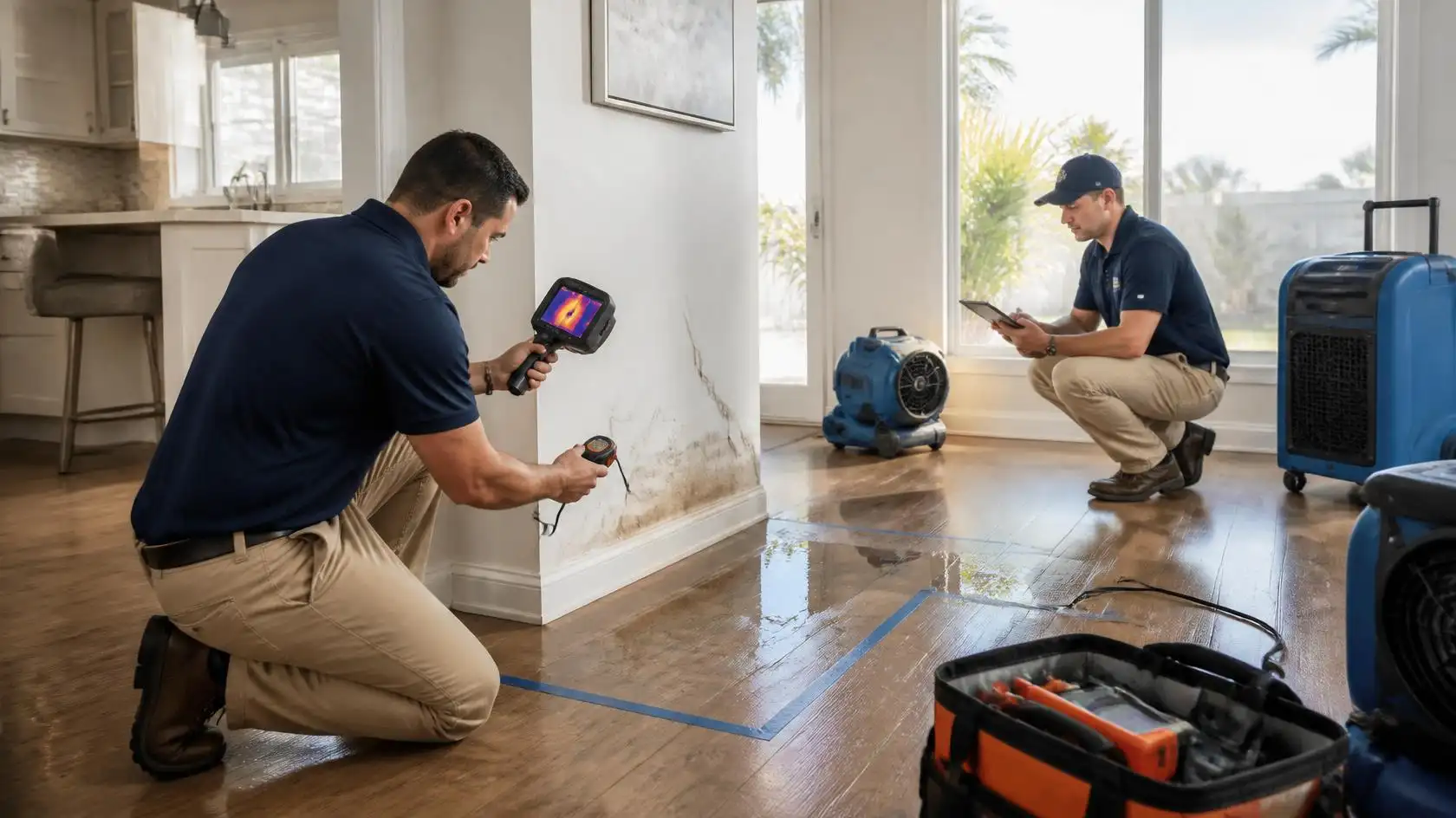
- Leak detection pinpoints the leak’s location using electronic listening equipment, pressure testing, and sometimes thermal imaging — so the repair doesn’t involve exploratory jackhammering.
- A licensed plumber repairs the line. Depending on the situation, that might be a spot repair through the slab, an epoxy pipe lining, or — very common with aging systems — a reroute that abandons the under-slab line and runs new pipe overhead through walls and the attic.
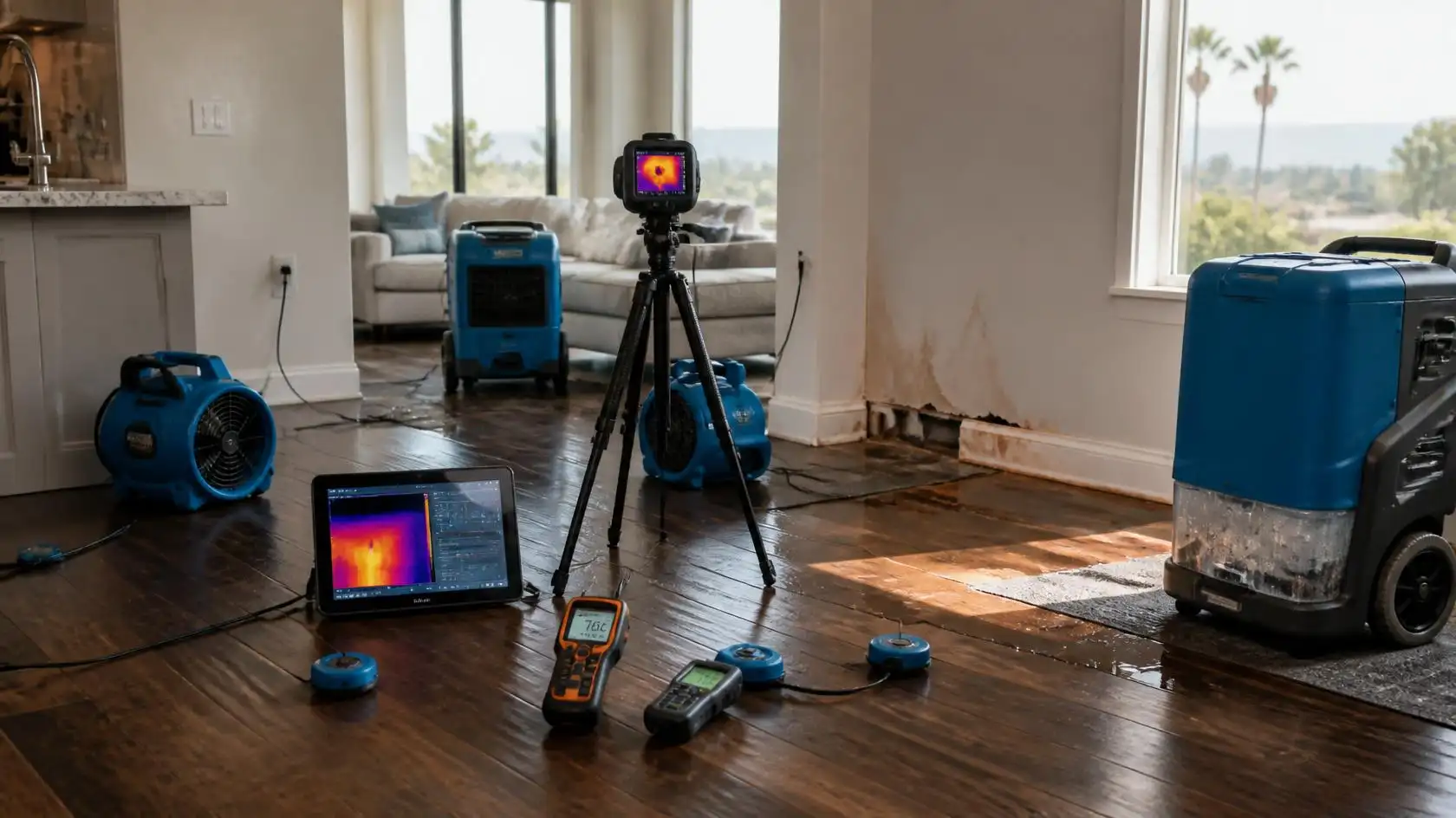
- A restoration company handles everything the water touched. This is where we come in. By the time a slab leak is found, moisture has often spent weeks wicking up into wall bases, saturating flooring, and soaking baseboards. Proper moisture mapping shows how far it actually traveled, professional drying brings the structure back to normal, and if the leak ran long enough for mold to take hold, remediation follows — with independent third-party clearance testing, which is our standard on every mold job.
The mistake we see most often: the pipe gets fixed, everyone relaxes, and the wet building materials never get properly dried. Weeks later, the musty smell shows up. A repaired pipe stops the source — it doesn’t undo what the water already did. Concrete slabs are among the slowest-drying materials in a home, and they’ll keep releasing moisture into flooring and walls long after the plumber leaves.
Can You Just Ignore a Small One?
We won’t fabricate urgency — a slab leak is rarely a drop-everything emergency in the way a burst pipe flooding your kitchen is. But it’s the opposite of a problem that ages well. Every week it runs, it’s paying for water you don’t use, potentially eroding soil beneath your foundation, pushing moisture into your flooring and walls, and feeding conditions for mold. Small slab leaks become big restoration projects on a schedule of their own choosing.
Confirmed leak, prompt action — that’s the honest advice.
Frequently Asked Questions
How much does slab leak repair cost?
It varies widely with the repair method — a spot repair, a reroute, and an epoxy lining are very different projects — so treat any number quoted before leak detection with skepticism. The restoration side (drying, flooring, drywall, possible mold remediation) is a separate cost that depends almost entirely on how long the leak ran before it was caught. Early detection is the biggest cost-control lever you have.
Does homeowners insurance cover slab leaks?
It depends on your policy. Many policies cover the resulting water damage from a sudden leak — the flooring, drywall, and drying — while excluding the cost of repairing the pipe itself, and coverage often turns on whether the damage is deemed sudden or long-term. Review your policy and confirm with your carrier before assuming either way. And remember: you have the right to choose your own restoration contractor — you’re not required to use your insurer’s preferred vendor.
Can a slab leak cause mold?
Yes, and it’s one of the most common ways hidden mold starts. Mold growth can begin on damp materials within 24 to 48 hours, and a slab leak often runs for weeks before discovery — moisture wicking into wall bases and under flooring the entire time. It’s why a musty odor with no visible source should always prompt a moisture inspection.
How do plumbers fix a pipe under concrete?
Three main approaches: opening the slab at the leak point for a direct repair, lining the existing pipe with epoxy, or rerouting — abandoning the under-slab line entirely and running new pipe through walls and ceilings. Reroutes are increasingly the default for older homes, because repairing one spot on a 50-year-old line often just schedules the next leak.
Is the water from a slab leak contaminated?
Usually not — supply line water is clean (Category 1) when it leaves the pipe. But water that has traveled through soil and under flooring for weeks doesn’t stay pristine, and long-standing moisture creates its own problems regardless of how clean the water started. The duration matters more than the source.
How long does it take to dry out after a slab leak?
Longer than a typical water loss. Concrete holds moisture stubbornly and releases it slowly, so drying a slab-leak-affected home often runs past the typical 3-to-5-day window — and drying is only complete when moisture meters say so, not when things look dry. We monitor daily and document every reading.
Suspect a Slab Leak? Get Straight Answers First
If your water bill jumped, your floor has a warm spot, or something smells musty and you can’t find why — start with the meter test above, then call us. Based in Santee and serving all of San Diego County for over 35 years, Gold Coast Flood Restorations will map exactly where the moisture went, tell you honestly how bad it is or isn’t, and handle the drying, restoration, and any mold remediation with independent third-party verification. If you don’t have a problem, we won’t fabricate one. And because slab leaks don’t keep business hours, we answer 24/7.
Call Gold Coast Flood Restorations at [PHONE] — any hour, any day.