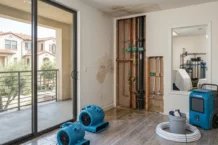
The short answer: not always before — but always after. If you can already see mold growing on a wall, ceiling, or baseboard, and you know what caused it (a leak, a flood, a failed appliance), a pre-remediation mold test usually tells you what you already know: you have mold, and it needs to come out. The U.S. EPA takes the same position — when visible mold is present, sampling is generally unnecessary, and the priority is fixing the moisture problem and removing the growth. Where testing becomes essential is in three situations: when mold is suspected but hidden, when you need documentation for a real estate transaction, insurance claim, or landlord-tenant dispute, and — most importantly — after remediation is complete, when independent clearance testing verifies the job was actually done right.
That last part is where a lot of San Diego homeowners get burned, so let’s walk through when testing makes sense, when it’s a waste of your money, and who should be holding the sampling equipment.
When You Do NOT Need a Pre-Remediation Mold Test
Some companies will happily sell you a mold test you don’t need. Here’s the honest version. You can typically skip pre-testing when:
- The mold is visible. Black, green, gray, or white growth on drywall, grout, wood framing, or baseboards is mold. A lab report confirming “yes, that’s mold” doesn’t change the next step, which is removing it and correcting the moisture source.
- The cause is obvious. A supply line burst under the kitchen sink last month, and now the cabinet base is fuzzy. You don’t need a test — you need remediation and proper structural drying.
- The affected area is small and contained. For very small patches of surface mold on non-porous materials (think grout in a shower), cleanup guidance from the EPA doesn’t call for professional sampling at all.
At Gold Coast Flood Restorations, our position has been the same for over 35 years: if you don’t have a problem, we’re not going to invent one so we can bill for it. That includes selling tests that won’t change the outcome.
When a Mold Test Is Worth the Money
Testing earns its keep when the situation is uncertain or when documentation matters:
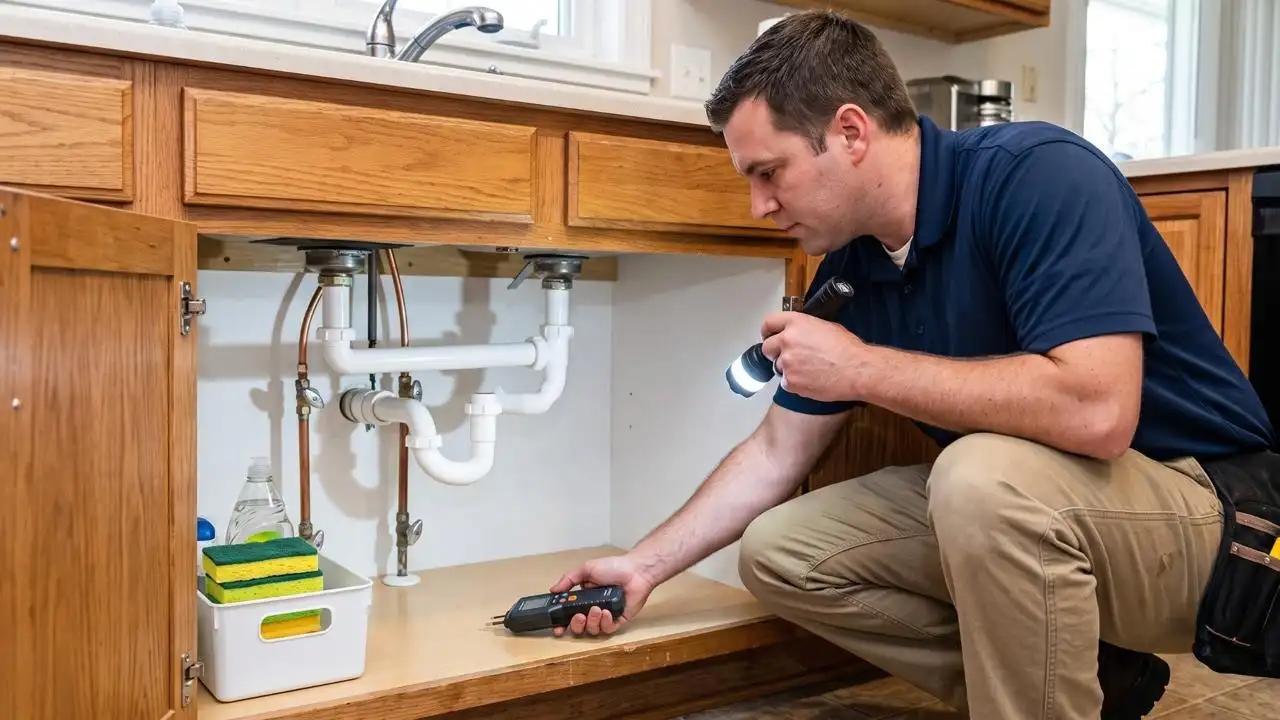
- You smell it but can’t see it. A persistent musty odor after winter rains — with no visible growth — often means mold is inside a wall cavity, under flooring, or in a crawlspace. Air sampling and moisture mapping can locate hidden growth before anyone starts cutting drywall.
- You’ve had water damage and don’t know how far it spread. Water travels. A second-story bathroom leak can wet the wall cavities two rooms away. Testing and moisture readings define the actual scope so remediation isn’t too small (mold left behind) or too large (paying to demo materials that were never affected).
- Allergy or sensitivity concerns. If someone in the home experiences allergy-type symptoms that seem worse indoors, air quality sampling can help determine whether elevated mold spore levels are part of the picture. (A mold test evaluates your home — it is not a medical diagnosis, and health questions belong with your doctor.)
- Real estate transactions. Buying or selling in San Diego’s competitive market? Independent test results provide neutral documentation both sides can rely on.
- Landlord-tenant disputes. Third-party lab results carry far more weight than photos when there’s disagreement about whether a rental has a mold problem.
- Insurance documentation. Adjusters deal in evidence. Independent sampling and a clear chain of custody strengthen your file. (Whether a specific loss is covered depends on your policy and how the damage occurred — always confirm details with your carrier.)
The Test That’s Never Optional: Post-Remediation Clearance
Here’s the standard we tell every customer, and it’s printed right on our homepage: after the mold has been removed, test again.
Post-remediation verification — often called clearance testing — is how you confirm the remediation actually worked before containment barriers come down and walls get closed up. A proper clearance involves a visual inspection, moisture verification, and air or surface sampling analyzed by an accredited laboratory, comparing indoor spore levels against outdoor baseline samples.
And this is the critical part: the company that removed your mold should not be the company that passes its own work. That’s grading your own exam. Independent, third-party clearance testing removes the conflict of interest entirely. When a separate, unaffiliated professional verifies our remediation work, you get proof — not a promise. It’s a standard we insist on because it protects you, and frankly, it keeps everyone in the process honest.
Who Should Do the Testing? (Read This Before You Hire Anyone)
Here’s something most San Diego homeowners don’t know: California does not license mold inspectors or mold remediation contractors. Unlike Texas, Florida, or New York, there is no state-issued “mold license” here. Anyone with a moisture meter and a business card can call themselves a mold inspector.
That makes vetting your own responsibility. Look for:
- Independence. The inspector should have no financial stake in the remediation work. If the same company tests, remediates, and then clears its own job, every incentive points toward finding problems and passing itself.
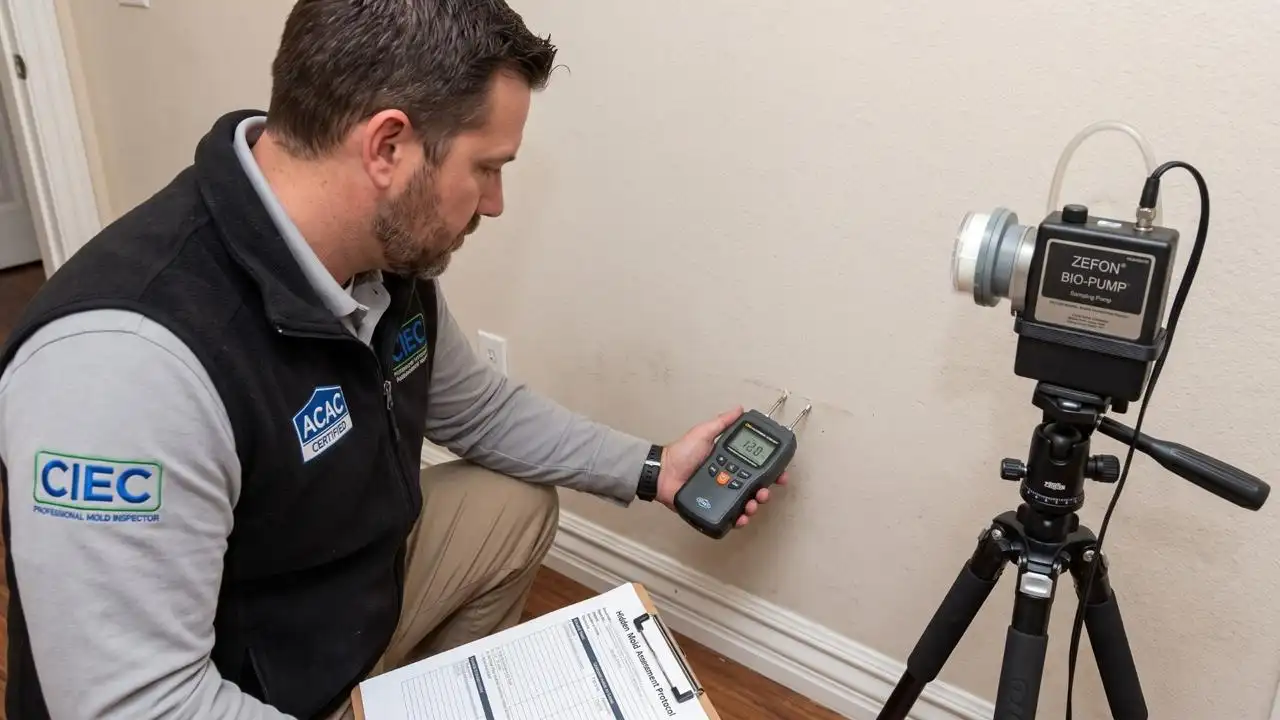
- Recognized credentials. Look for certifications from bodies like the American Council for Accredited Certification (ACAC) — such as the Council-certified Microbial Investigator (CMI) or Council-certified Indoor Environmental Consultant (CIEC) — or IICRC training in mold-related disciplines.
- Accredited laboratory analysis. Samples should go to an independent, accredited lab, with results reported to you directly.
- A written protocol. A qualified assessor gives the remediation contractor a written scope of work, and the clearance criteria are defined before the work starts — not after.
- Local experience. An inspector who understands how San Diego homes are built — and how they get wet — will find things an out-of-area generalist misses.
Why San Diego Homes Have a Complicated Relationship With Mold
Our climate gets marketed as “perfect,” but from a moisture standpoint, San Diego County has some very specific vulnerabilities:
- Marine layer humidity. Coastal neighborhoods — La Jolla, Del Mar, Solana Beach, Encinitas, Ocean Beach — live under months of May Gray and June Gloom. That persistent damp marine air raises indoor humidity, and in homes with poor ventilation, condensation on cool surfaces can support mold growth without a single leak.
- Winter atmospheric rivers. Most of our rain arrives in concentrated bursts between December and March. Roofs, flashing, and drainage systems that sat dry for eight months suddenly get stress-tested all at once — and slow leaks into attics and wall cavities often go unnoticed until the musty smell shows up.
- Slab-on-grade construction. A huge share of homes across Santee, El Cajon, La Mesa, Poway, and Rancho Bernardo sit on concrete slabs with copper water lines running beneath them. Slab leaks can wick moisture up into interior walls for weeks before anyone notices — a classic source of hidden mold that only testing and moisture mapping will find.
- Older housing stock inland. Post-war homes in East County and central San Diego often have original plumbing, minimal ventilation in bathrooms, and crawl spaces where moisture lingers.
- The 24–48 hour reality. Mold growth can begin on wet building materials within 24 to 48 hours. In a region where homeowners sometimes assume “it’s dry here, it’ll evaporate,” that window closes fast — especially during humid coastal weather when evaporation slows down.
None of this means every San Diego home has mold. It means that when water intrudes here, the question of where it went deserves a real answer — not a guess.
What the Right Process Looks Like, Start to Finish
When testing and remediation are done properly, the sequence looks like this:
- Identify and fix the moisture source. Remediation without fixing the leak is temporary by definition.
- Assess the scope. Visual inspection, moisture readings, and — where growth is hidden or documentation matters — independent sampling.
- Contain and remediate. Physical containment, negative air pressure, HEPA filtration, and removal of mold-affected porous materials following IICRC S520 industry standards.
- Dry and verify moisture levels. Structural drying confirmed with meters, not eyeballs.
- Independent clearance testing. A third-party professional confirms spore levels and visual criteria pass before containment comes down.
- Rebuild. Only after clearance.
If a company you’re interviewing skips step 5 — or offers to do it themselves — that tells you something.
Frequently Asked Questions
Question: How much does a mold test cost in San Diego?
Answer: Independent mold inspections with air sampling in the San Diego area typically run in the range of a few hundred dollars, depending on the size of the home and the number of samples needed. Be cautious of free mold tests offered by companies that also sell remediation — the test may be free, but the incentive problem isn’t.
Question: Can I just use a home mold test kit from the hardware store?
Answer: DIY settle-plate kits will almost always grow something, because mold spores exist in virtually all indoor and outdoor air. They can’t tell you whether your levels are abnormal, where growth is located, or what’s happening inside your walls. For decisions that involve real money — remediation, a home purchase, a dispute — professional sampling with lab analysis and an outdoor control sample is the only version worth relying on.
Question: Does Gold Coast Flood Restorations do its own mold testing?
Answer: We keep testing and remediation separated on purpose. Our team handles inspection, moisture assessment, containment, removal, and structural drying — and we recommend independent, third-party testing professionals for sampling and post-remediation clearance. That separation is deliberate: you deserve verification from someone with no stake in our invoice.
Question: Do I need a mold test if I already see mold?
Answer: Usually not before the work. Visible mold needs removal, and the cause needs correction — a lab report doesn’t change that. Where testing still adds value with visible mold is defining hidden spread beyond what you can see, and always at clearance after the remediation is finished.
Question: How long after water damage does mold start growing?
Answer: Mold growth can begin within 24 to 48 hours on wet materials. That’s why fast water extraction and structural drying matter so much — proper drying in that window is how you avoid needing mold remediation at all.
Question: Is the mold in my house dangerous?
Answer: Mold exposure can trigger allergy-type reactions in people who are sensitive to it, and elevated indoor mold isn’t something anyone should live with. Questions about your health, though, belong with your doctor — a mold inspection evaluates your home, not your body. Our job is to make sure your home isn’t the problem.
Question: Does homeowners insurance pay for mold testing and remediation?
Answer: It depends on your policy and on what caused the mold. Mold resulting from a sudden, covered water loss is treated differently than mold from long-term neglect or outside flooding, and many policies carry specific mold limits. Review your policy and talk with your carrier — and know that as a homeowner, you have the right to choose your own restoration contractor rather than being required to use your insurer’s preferred vendor.
Talk to San Diego’s Straight-Answer Restoration Team
If you’ve found mold — or you smell something musty and can’t find the source — start with an honest assessment. Based in Santee and serving all of San Diego County for over 35 years, Gold Coast Flood Restorations has built its reputation on one principle: if you don’t have a problem, we won’t fabricate one. We’ll tell you when testing makes sense, when it doesn’t, and we’ll insist on independent third-party clearance when remediation is done — because you deserve proof, not promises.
Water damage and mold don’t wait for business hours, and neither do we. Our team is available 24/7 across San Diego County, from the coast to East County.
Call Gold Coast Flood Restorations today at (858) 495-9133 for an honest evaluation of your mold or water damage situation.