If sewage is backing up into your home right now, do three things before you read another word: keep people and pets out of the affected area, stop running water down any drain — every flush and every load of laundry makes it worse — and call us at [PHONE], any hour, any day. Sewage is Category 3 “black water” under the IICRC S500 industry standard: grossly contaminated water that can carry bacteria, viruses, and parasites. It is the one household water emergency where do-it-yourself cleanup is genuinely the wrong answer — not because we want the job, but because a mop and a shop vac can’t disinfect a structure, and sewage that’s cleaned up partially doesn’t announce the problem it left behind until the odor and mold show up weeks later.
Gold Coast Flood Restorations has cleaned up sewage backups across San Diego County for over 35 years. Based in Santee, staffed by IICRC-certified technicians, and available 24/7, we handle these losses completely: safe removal, professional disinfection, verified structural drying, and honest documentation from the first walk-through to the last moisture reading.
Why Sewage Backs Up Into San Diego Homes
After three and a half decades here, we can tell you the county’s sewage backups follow predictable patterns:
- Aging sewer laterals. The sewer lateral is the private pipe connecting your home to the city main — and here’s what surprises most homeowners: in most of San Diego County, that lateral is your responsibility, even the portion running under the street. Much of our housing stock dates to the postwar booms, which means tens of thousands of homes are still on their original clay laterals, now 50 to 70 years old. Clay pipe joints are a standing invitation to tree roots, and root intrusion is the single most common blockage we see behind residential backups.
- Grease, wipes, and paper products. Grease solidifies in the line no matter how much hot water chases it down. And “flushable” wipes are flushable only in the sense that they leave the bowl — they don’t break down like toilet paper, and they’re a modern epidemic in sewer blockages. Diapers, paper towels, and feminine products belong in the trash for the same reason.
- Winter storm surcharge. When December-through-March storms saturate the ground and overwhelm the system, municipal sewer mains can surcharge — and the excess has to go somewhere. In homes below the surcharge level, it comes up through the lowest drain in the house: a shower, a floor drain, a downstairs toilet.
- Main line problems. Sometimes the blockage is in the city’s main, not your lateral. If multiple drains back up at once — or your neighbors have the same problem — call the city’s sewer emergency line as well. A plumber can usually determine which side of the connection the problem is on, and when tree roots from city trees are involved, responsibility is sometimes shared.
What to Do (and Not Do) While You Wait
Do:
- Keep everyone — especially children and pets — out of the affected area.
- Stop using water anywhere in the house if the backup is drain-related.
- If sewage is near outlets or appliances and it’s safe to reach the panel, shut off electricity to the affected area.
- Photograph the damage from a safe distance for your insurance claim.
- Open windows for ventilation if weather allows.
Don’t:
- Don’t attempt cleanup with household equipment. A shop vac used on sewage contaminates the vac and aerosolizes what should stay put; towels and mops just spread contamination to new surfaces.
- Don’t run fans directly at raw sewage — drying it in place is not the goal; removing it is.
- Don’t assume “it looks like mostly water” means it’s safe. Contamination isn’t visible.
- Don’t flush “one more time to check.” It rarely goes the way people hope.
How Professional Sewage Cleanup Works
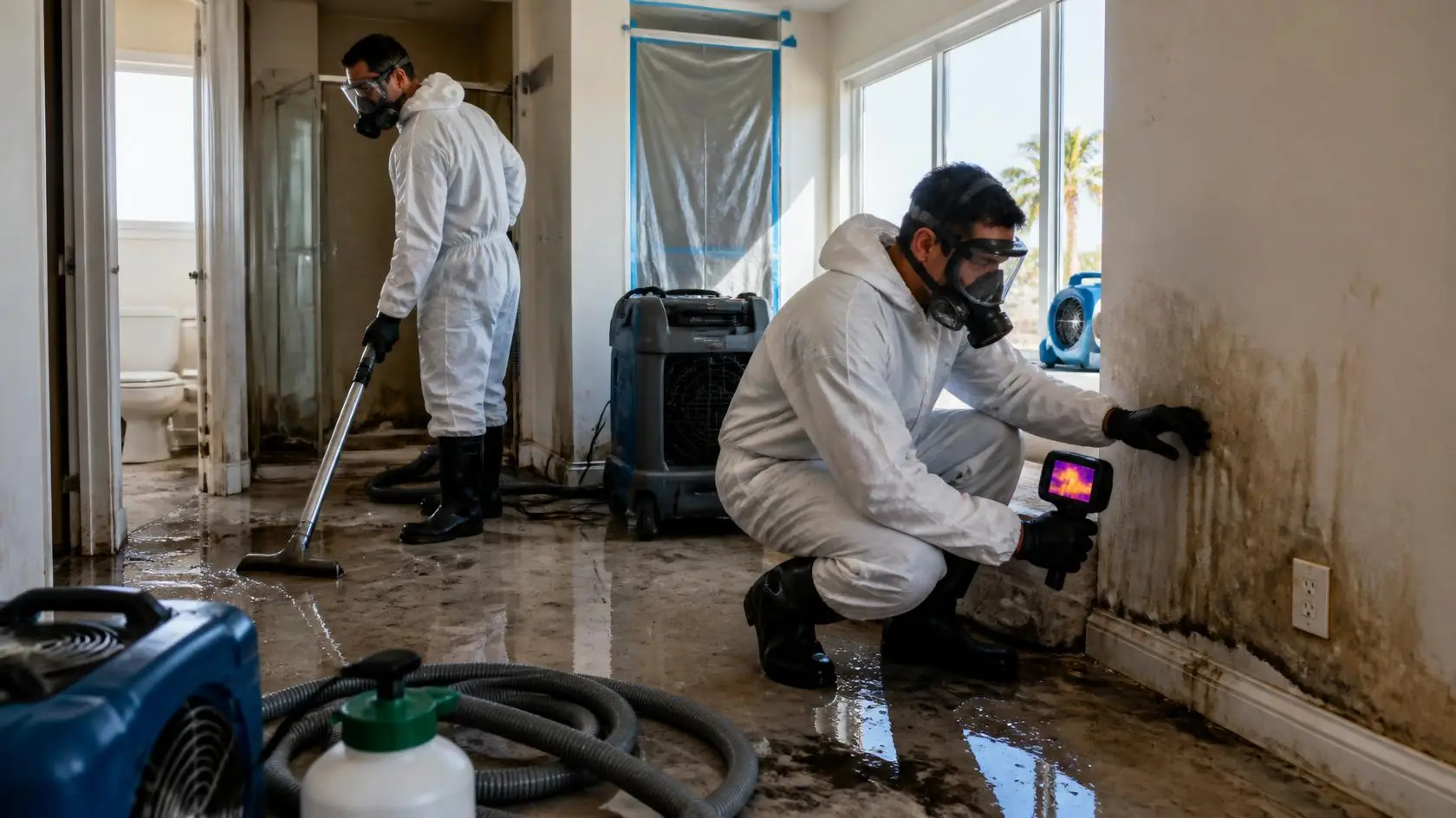
- Assessment and containment. We identify how far the contamination traveled — sewage wicks into porous materials just like clean water does — and isolate the affected area to prevent cross-contamination into the rest of your home.
- Sewage and water removal. Contaminated water and solids are extracted with dedicated equipment, under full protective protocols. Our technicians train specifically for Category 3 work.
- Removal of contaminated porous materials. Carpet and pad, affected drywall, and insulation that absorbed sewage generally cannot be sanitized — they’re removed and disposed of properly. Hard, non-porous surfaces stay and get cleaned. This isn’t upselling; it’s the industry standard, and it’s the difference between clean and looks-clean.
- Cleaning and disinfection. Every affected surface is cleaned and treated with professional antimicrobial products — the step no household product application can replicate for coverage and dwell time.
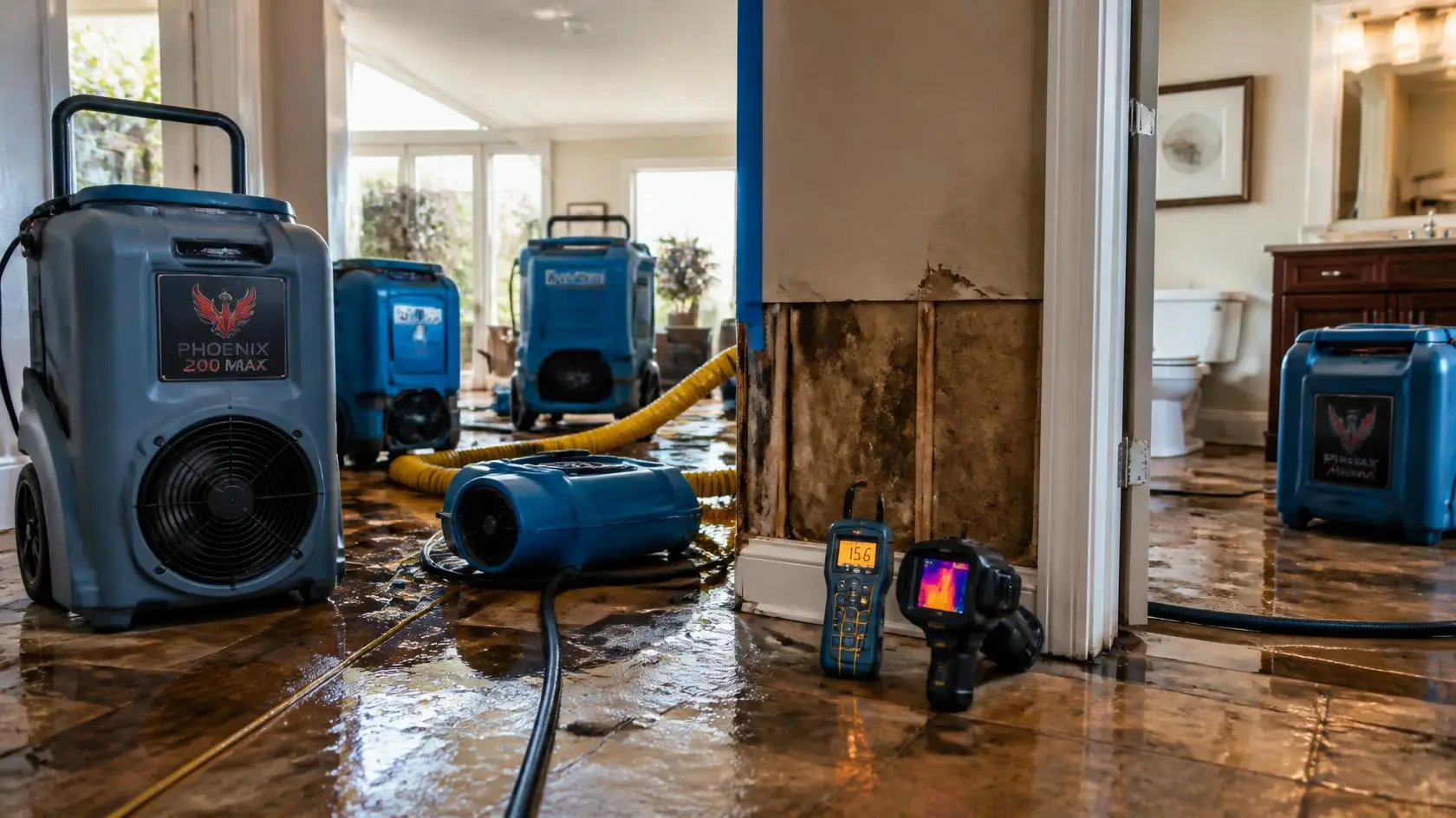
- Structural drying, verified. Air movers and dehumidifiers dry the structure, and we prove it with moisture meters and daily documented readings. Mold growth can begin on wet materials within 24 to 48 hours, and a sewage loss that’s disinfected but not fully dried just trades one problem for another.
- Repairs. Once the structure is verifiably clean and dry, our team rebuilds what was removed — drywall, baseboards, flooring — so one call finishes the whole job.
Note the division of labor: we handle everything the sewage touched. Clearing or repairing the blocked line itself is a plumber’s job, and if you don’t have one, we’re glad to point you toward getting the right help — the line must be fixed before cleanup can hold.
Insurance and Sewage Backups: Read This Before You Assume
Here’s the uncomfortable truth: standard homeowners policies often do not cover sewer backup by default. Coverage typically comes as a separate endorsement — water backup coverage — that has to be added to the policy, and many homeowners discover it’s missing at the worst possible moment. We can’t tell you what your policy includes; only your policy and your carrier can. What we can tell you: check now, before you need it, and if a covered loss does occur, we document everything — photos, moisture readings, removed materials, scope — to support your claim. And remember that as the property owner, you have the right to choose your own restoration contractor. You are never required to use your insurer’s preferred vendor.
Preventing the Next One
An honest word: not every backup is preventable, and we won’t sell you fear. But the highest-value prevention steps in this county are real:
- Get the lateral inspected. A camera inspection of a 50-year-old clay lateral tells you what’s coming before it arrives. If roots are intruding, scheduled root cutting or lining/replacement beats an emergency.
- Consider a backwater valve. Installed on your sewer line, it lets flow out but blocks surcharge from coming back in — genuine protection for homes that sit low relative to the main. Check with your local sewer authority and use a licensed plumber; permits typically apply.
- Watch what goes down. No grease, no wipes (whatever the package says), no paper products besides toilet paper.
Sewage Doesn’t Wait for Business Hours — Neither Do We
A sewage backup gets worse by the hour, and it’s the one cleanup where doing it right the first time matters most. Gold Coast Flood Restorations — Santee-based, IICRC-certified, serving all of San Diego County for over 35 years — answers 24 hours a day, every day of the year. Our incorporated name is Integrity Flood Response, and on this job especially, we earn it.
Sewage in your home? Call [PHONE — confirm primary: (858) 495-9133 or (619) 449-9611] now — any hour, any day.
Related Services
- Black Water Cleanup — what Category 3 water is and every form it takes
- Water Damage Restoration — the complete restoration process, extraction through rebuild
- Flood Restoration — storm and flood recovery for homes and businesses
- Mold Remediation — removal with independent third-party verification
From the blog: What’s the Difference Between Water Damage I Can Clean Myself and Water Damage That Needs a Pro? · How Long Does It Take to Dry Out a House After Water Damage?