The fastest way to tell is to check for cupping, crowning, or gaps between boards, press down near the suspected leak to feel for sponginess, and use a moisture meter if you have one — a reading above 16% in wood typically means moisture is trapped underneath. If you don’t have a meter, a musty smell, a board that feels cooler than the rest of the floor, or discoloration along the seams is usually enough evidence to call a water damage restoration company in San Diego County for a moisture inspection before the subfloor starts to rot or mold takes hold.
The Visual Clues You Can Check Right Now
Hardwood floors don’t usually show damage where the water actually went in. By the time you see a problem on the surface, the water has often been sitting under the boards for days. Here’s what to look for:
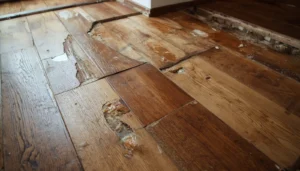
- Cupping: the edges of each board curl upward while the center stays lower, so the floor looks like a series of shallow troughs. This is almost always moisture coming from underneath.
- Crowning: the opposite of cupping — the center of the board rises higher than the edges, often after a floor has cupped and then dried too fast.
- Gapping: small spaces open up between boards as the wood shrinks due to moisture loss, often appearing weeks after the original event.
- Discoloration along seams: a darkened line along the tongue-and-groove joints, especially near exterior walls, windows, or the kitchen and laundry room.
- Soft or “bouncy” spots: press your weight down near where you suspect the leak started. If the floor flexes more than the surrounding area, water has likely reached the subfloor.
Engineered hardwood and floating floors, common in newer builds around 4S Ranch and Rancho Bernardo, tend to show signs more quickly because the plywood core beneath swells unevenly, sometimes lifting at the seams within days rather than weeks.
Water travels downhill and pools at the lowest point in a room, so check along exterior walls, in front of the dishwasher and refrigerator, around toilets, and near sliders or French doors. In two-story homes throughout Scripps Ranch and Carmel Valley, a leak upstairs can show up as cupping on the hardwood directly below, so don’t assume the source and the symptom are in the same room.
Why Hardwood Hides Water Damage So Well
Solid hardwood is dense and sealed on top, which is exactly why it’s deceptive after a leak. Water from a slab leak, a dishwasher line, or a roof leak above travels along the subfloor, following gravity, sometimes ending up several feet from the actual source. That’s why homeowners across San Diego County so often get blindsided by mold or rot under a floor that “looked fine” for weeks.
The Institute of Inspection, Cleaning and Restoration Certification (IICRC), which sets the S500 standard for water damage restoration that most licensed contractors follow, classifies water intrusion by how far it has spread and what materials it has reached — not just by how it looks on the surface. That’s why a visual check alone often isn’t enough.
The Tools a Professional Actually Uses
- Moisture meter (pin or pinless): measures moisture content inside the wood and subfloor without tearing anything up. Normal hardwood reads 6–9%; anything in the high teens or above is a red flag.
- Infrared thermal camera: shows temperature differences across the surface that often indicate wet areas hidden underneath, since wet wood typically reads cooler than nearby dry wood.
- Hygrometer: measures humidity in the room’s air, which matters most in homes near the coast, such as La Jolla or Del Mar, where ambient humidity is already higher.
Combining these tools is how a technician tells the difference between a small cosmetic stain and a slow leak that’s been feeding moisture into your subfloor for a month.
Common Causes Behind San Diego County Homes
- Slab leaks: common in older homes throughout El Cajon, Santee, and La Mesa, where the copper piping beneath the slab has begun to corrode. Water often travels along the bottom of the slab before surfacing, so the leak may have run for weeks before the hardwood shows damage.
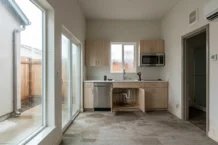
- Dishwasher and refrigerator line failures: a cracked supply line tucked behind cabinetry can drip just enough each day to keep the subfloor damp without ever creating a visible puddle.
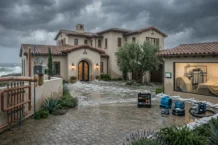
- Window and door leaks during winter storms: coastal-influenced neighborhoods like Solana Beach and Encinitas see this more often because of wind-driven rain against west-facing doors and windows.
- HVAC condensation: a clogged condensate line can drip steadily for weeks near closets or hallway air handlers.
- Water heater failures: a slow leak at the base can saturate nearby flooring for days before anyone notices, especially in garages or utility closets that share a wall with hardwood.
- Pet water bowls and houseplants: a daily spill in the same spot near a sliding door can warp boards over time.
What Happens If You Wait
This is the part that costs homeowners the most. Wood that stays wet for more than 24–48 hours becomes a strong candidate for mold growth, according to the U.S. Environmental Protection Agency (EPA), which notes mold can begin growing on damp materials within one to two days. Left longer, the subfloor — usually plywood or oriented strand board — can begin to delaminate or rot, turning a flooring repair into a structural one.
There’s also an insurance timing issue. Most homeowners’ insurance covers sudden, accidental water damage, but adjusters look closely at how quickly the homeowner acted. Letting a known leak sit for weeks can be used to argue that the damage resulted from neglect rather than a covered event. Acting fast and documenting everything — photos, moisture readings, a written inspection report — protects you either way.
What a Restoration Company Will Actually Do
- Extraction: any standing or trapped water is removed first.
- Moisture mapping: the affected area is measured and marked so drying progress can be tracked daily.
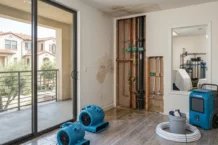
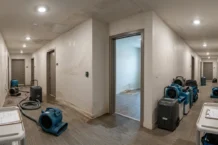
- Controlled drying: industrial air movers and dehumidifiers gradually dry the subfloor, since hardwood responds more slowly to humidity changes and can cause further cupping or cracking.
- Re-testing: moisture readings continue until the wood and subfloor return to a normal range.
- Repair or refinish decision: floors that haven’t moved much can often be sanded and refinished once dry; others may require sections to be replaced.
Homeowners from Tierrasanta to Poway often ask whether the entire floor needs to be replaced. In many cases, no — if the water didn’t spread far and the boards were caught early, a partial section can be addressed without redoing the entire room.
When to Call Someone Today, Not Next Week
Call a restoration professional right away if you notice a musty smell that wasn’t there before, cupping or buckling near a kitchen or bathroom, a recent appliance or slab leak even if it seemed minor, spreading discoloration, or any sign of water intrusion near doors or windows after a heavy rain event.
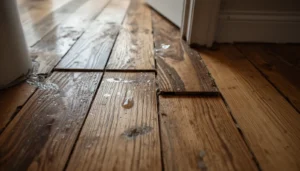
Gold Coast Flood Restorations has served homeowners throughout San Diego County for more than 35 years, with IICRC-certified technicians who use professional moisture meters and thermal imaging to determine exactly how far water has traveled beneath your floors — not just guessing based on what’s visible. The company is BBB-accredited with an A+ rating and offers 24/7 emergency response, because the difference between catching a leak on day one versus day ten is often the difference between a floor repair and a full subfloor replacement.
Frequently Asked Questions
Can hardwood floors be saved after water damage, or do they always need to be replaced? It depends on how long the wood stayed wet and how far the moisture spread. Boards caught within a day or two, with proper subfloor drying, can often be sanded and refinished. Boards that cupped severely or sat wet for days usually need to be replaced in sections.
How long does it take hardwood floors to dry out after a leak? With industrial air movers and dehumidifiers, most hardwood floors take 3 to 10 days to reach a safe moisture level, depending on the wood type, how deep the water went, and the size of the affected area. Air-drying without equipment can take weeks and often isn’t enough to fully dry the subfloor.
Will my homeowners’ insurance cover water damage under hardwood floors? Most policies cover sudden, accidental damage, such as a burst pipe or appliance failure, but typically exclude damage from long-term leaks or deferred maintenance. Adjusters often want documentation of when the leak was found and how quickly it was addressed.
Can I just sand and refinish cupped hardwood floors without fixing the moisture source first? No. Refinishing before the wood and subfloor are fully dry, and before the source is repaired, almost always brings the problem back — sometimes worse, since sanding adds heat and removes the protective top layer.
Is it safe to walk on hardwood floors that might have water damage underneath? Generally, yes for short-term use, as long as the floor doesn’t feel spongy or unstable. If it flexes noticeably under your weight, avoid that area and have it inspected.
Do I need a mold inspection if I find water damage under my hardwood floors? If the wood has been wet for more than 48 hours, it’s worth pairing a mold inspection with the moisture assessment, since the EPA notes mold can begin growing on damp materials within one to two days.
If you suspect water got under your hardwood floors anywhere in San Diego County, call Gold Coast Flood Restorations now at (619) 449-9611 for a moisture inspection before the damage spreads any further.